ContentsView article sections
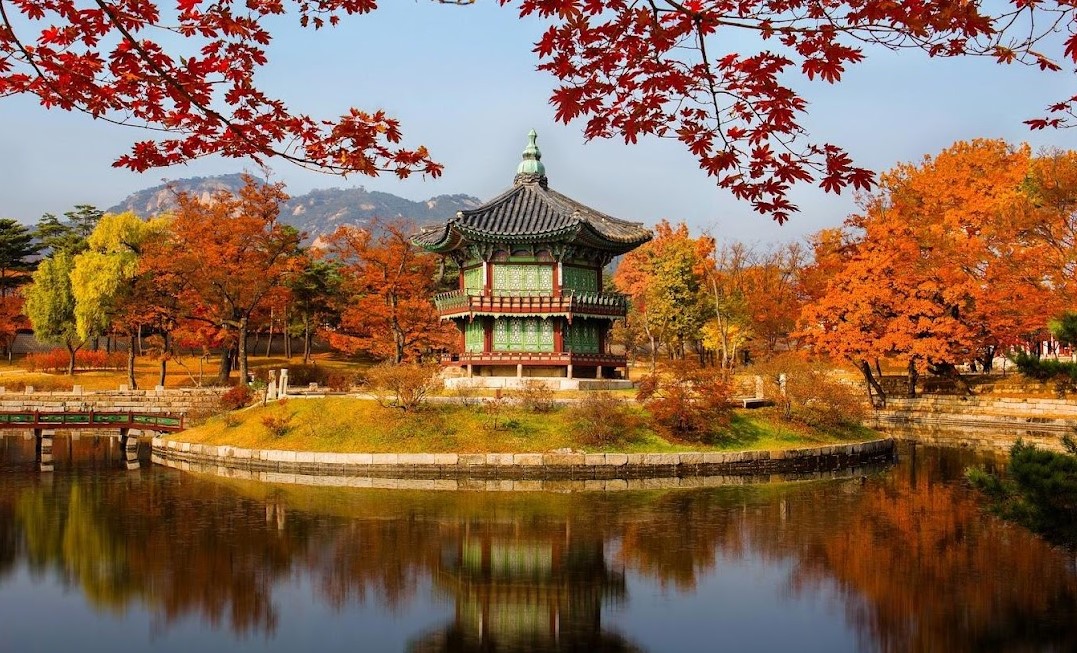
Fall is my favorite season in South Korea! Growing up in Texas, I didn’t think much of fall. When we experienced our first Korean fall, I had no idea what to expect. Everyone was so excited to get outside and enjoy the fall foliage in South Korea and I thought to myself, “What’s so special about fall?” Then it happened!
Why I Fell in Love with Fall in South Korea
The cool air rejuvenated my spirit as the heat of summer faded into the distance. Suddenly, all the outdoor adventures we postponed because of the monsoon rains of July or the sweltering heat wave of August could finally commence! We could hike, bike, and spend the entire day outside together.
While on these adventures, I would find out the best part of fall, the secret Texans don’t all know, the spectacular color show of the leaves changing!
The leaves were like a paint palette, with brushes of color everywhere. Where I am from in Texas, almost all the leaves on the trees were burnt to a crisp by fall, if not by drought, then by fires. Here on the peninsula, leaves were dancing in the wind and fluttering all around. Fall flowers were blooming, and in the morning, there were breathtaking views as the cool fog blanketed the mountains in the distance. Of course, fireside get-togethers at night were also in store!
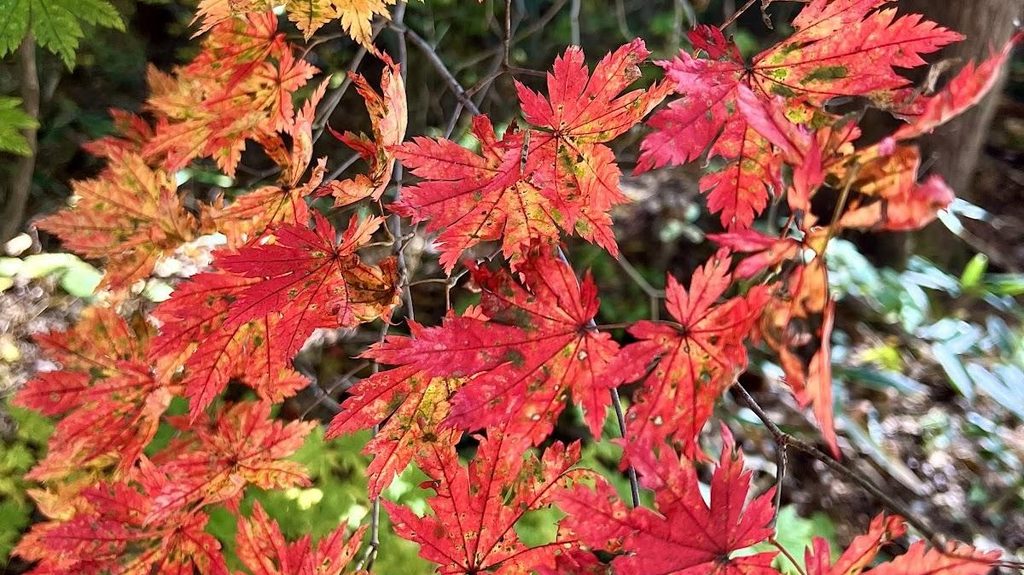
Fall was the gift I didn’t know I needed. The reds, oranges, yellows, and even pink colors of fall would open my eyes to the beauty that happens each year.
When Is Fall Foliage Season in South Korea?
Fall foliage season in South Korea generally begins in the cooler northern and mountainous areas before moving south across the country. However, peak foliage dates change each year depending on temperatures and weather conditions.
That means planning a fall adventure can sometimes require a little flexibility. If seeing peak fall colors is important to you, check the current year’s foliage forecasts before heading out.
Even if you miss the peak season for autumn leaves in Korea, don’t let that stop you. Some of my favorite fall adventures have included everything from golden ginkgo trees and pink muhly to colorful mountains and late-season warm tones.
Wondering when to plan your fall adventure? The beautiful thing about autumn in South Korea is that the colors don’t appear everywhere at once! The northern mountains usually start showing their colors first, followed by central Korea and then the southern regions.
Here’s a general guide to help you decide when and where to explore. Remember, Mother Nature doesn’t follow a calendar, so check the latest foliage forecast before heading out!
Best Times to Enjoy Autumn Colors by Region
| Region | Typical Best Viewing Period |
|---|---|
| Gangwon-do (Seoraksan, Pyeongchang) | Mid to late October |
| Seoul and Gyeonggi-do (Pyeongtaek, Yongin) | Late October to early November |
| Chungcheongnam-do (Asan, Cheonan, Nonsan, Taean) | Late October to early November |
| Daejeon (Jangtaesan Natural Recreation Forest) | Late October to early November |
| Gyeongsangbuk-do (Andong, Gyeongju) | Late October to early November |
| Southern South Korea | Early to mid-November |
Planning note: These are approximate seasonal viewing windows based on general autumn foliage patterns, not confirmed peak dates. Timing varies each year depending on temperatures, elevation, location, and tree species. For updated information, refer to VisitKorea Website and enter “Korea Fall Foliage Forecast” followed by the year into the search function.
Best Places to Experience Fall Foliage in South Korea
Over the years, my family and I have explored some of the best places to see autumn leaves in Korea. Some are famous destinations, while others are places you may not immediately think about when planning a fall adventure.
I want to share some of our must-go spots in South Korea this fall, and I hope you enjoy them as much as we have over the years.
Choosing Your Fall Adventure
Not sure where to start? If you’re living in the Pyeongtaek area, Nae-ri Cultural Park and Simboksa are great places to enjoy fall without traveling far from home.
Have a full day to explore? Consider Yongin, Asan, Cheonan, or Daejeon. If you’re ready for a longer adventure, destinations like Gyeongju, Andong, and Seoraksan offer beautiful fall scenery along with opportunities to experience Korean history and culture.
Whether you have a few hours or an entire weekend, there is always somewhere new to explore!

Pyeongtaek in Fall
You don’t have to travel far to start enjoying fall colors in Korea. For those of us living around Pyeongtaek, Camp Humphreys, and Osan Air Base, there are beautiful places close to home where you can enjoy fall flowers, changing leaves, peaceful walks, and cooler weather.
Nae-ri Cultural Park
Around the corner from Camp Humphreys’ Yoon Gate, you will find the Nae-ri complex, a community favorite with its fantastic jungle gym, zip line for kids, summer splash pads, and paths for cycling and walking.
During September and October, you will find walking trails with pops of color from hundreds of cosmos flowers and the famous pink muhly grass. People come out in droves to take family portraits and get Instagram-worthy shots in the pink grass!
Take a bike ride or walk along the river and spot one of the many coffee shops to enjoy the fall day at the park!

Naeri-munhwa Park
031-618-8446
Copy and paste phone numbers into Naver Maps to get directions
Hangul Name
평택내리문화공원
Hangul Address
경기 평택시 팽성읍 내리길 64-23
Description
Whether youre looking for a playground, a jogging spot with beautiful scenery, a picnic beside the river, or a camping spot, this large park offers many possibilities. Included picture of the map for more details.
Simboksa Buddhist Temple
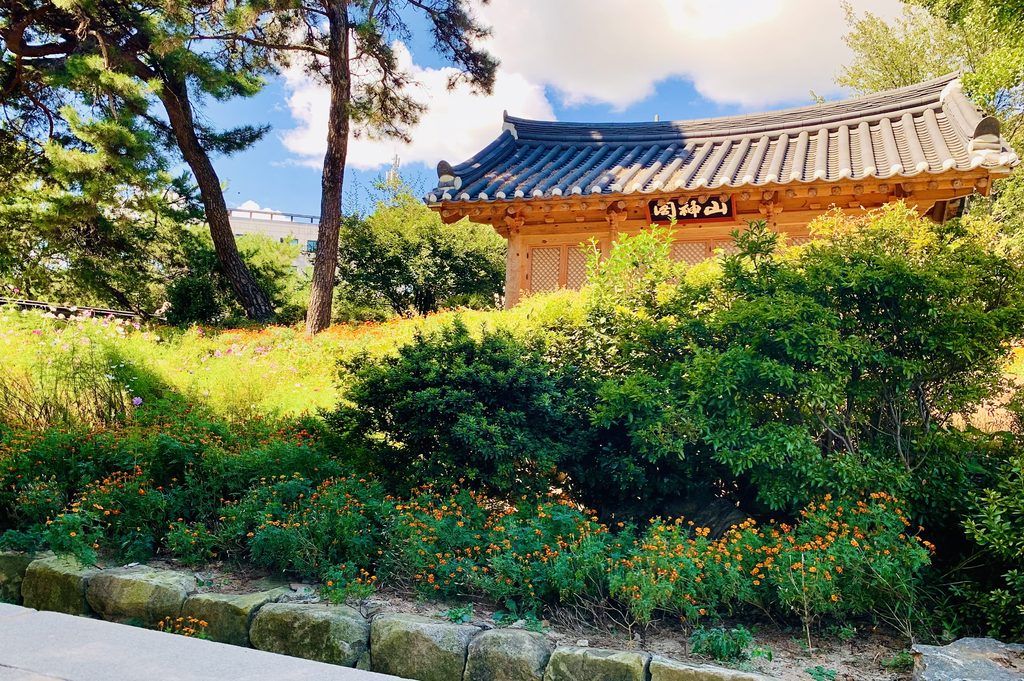
On a hill overlooking the countryside sits Simboksa. There are peaceful lily ponds, a couple of gardens, and various shrines around the grounds.
If you head up the mountain toward the back of the property, the stairs will take you to an area overlooking the valley beneath that stretches for miles.
Simboksa is a close place of respite for those living in Pyeongtaek.
Want to make a day of it? South of Seoul’s Ma an-san Hike Itinerary in Pyeongtaek combines a relaxing hike near Pyeongtaek Lake with a visit to Simboksa, making it an easy fall adventure close to home. If visiting Simboksa inspires you to explore more of Korea’s beautiful Buddhist temples, check out 5 Temples in or near Pyeongtaek for even more places to explore.

Simboksa Temple
031-682-5588
Copy and paste phone numbers into Naver Maps to get directions
Hangul Name
심복사
Hangul Address
경기 평택시 현덕면 심복사길 22
Description
A Stone Buddha from the Unified Silla, which was enshrined in Vairocana Hall of Simboksa Temple and constructed on the 5th year of Joseon King Myeongjongs reign (1549), exudes a meek, yet austere mood. Tourists will find the episodes concerning the construction of this temple fun and interesting.
Yongin in Fall
If you’re ready to venture a little farther from Pyeongtaek, Yongin in Gyeonggi-do offers plenty of additional ways to enjoy the season.
Everland Theme Park in Yongin
Kids and adults of all ages enjoy Everland!
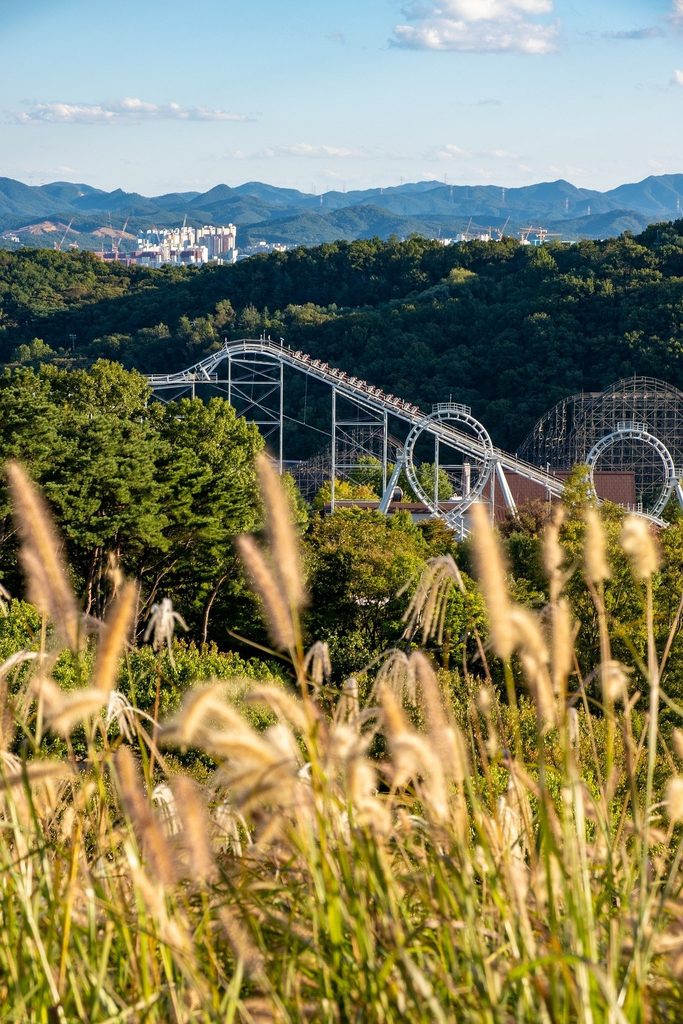
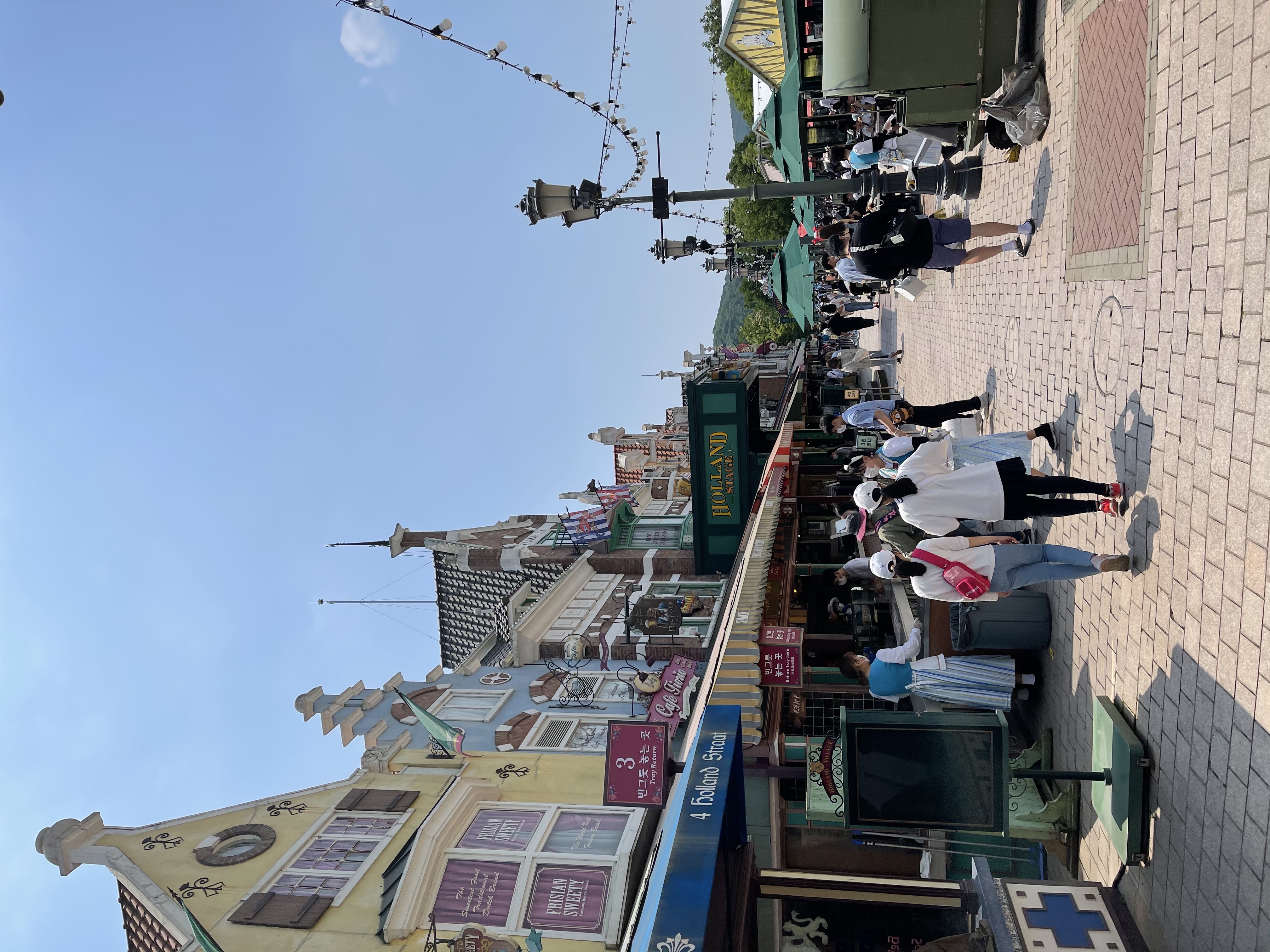
Everland is a fun Korean theme park with rides, food, and beautiful gardens. The park is situated in the hills, making this an ideal place for adults to walk, view the gardens and mountains, and have some fun on the attractions too!
It’s huge, so make sure you can spend the entire day there exploring!
Of course, Everland isn’t the only reason to explore Yongin! If you want to turn your fall adventure into more time exploring the area, check out 10 Top Things to Do in Yongin. You may just find another adventure to add to your list!
Everland
Hangul Address
경기도 용인시 처인구 포곡읍 에버랜드로 199
Description
This amusement park has a little bit for everyone: a zoo, safari, roller coasters, little kid rides, street food, restaurants and cafes. You can get discounted tickets often times on Klook and Trazy or the Everland website.
Seoul in Autumn
Seoul gives you the opportunity to enjoy brilliant fall colors while exploring some of the city’s most famous cultural and outdoor destinations.
Gyeongbokgung Palace
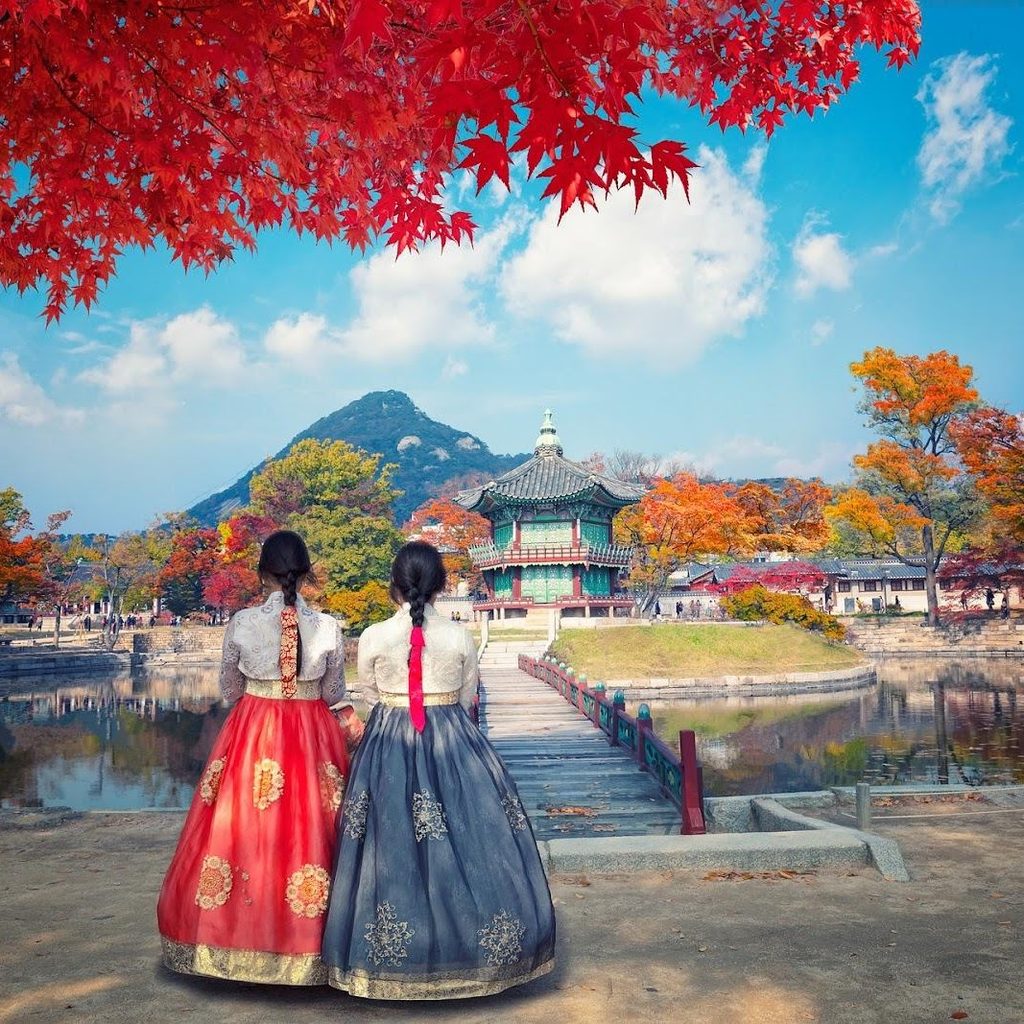
Dress up in a rented hanbok while it is cool and head to the palace! See the changing of the guard, tour the meticulously curated gardens and grounds, look at the architecture, and check out the museums too.
Fall is a wonderful time to explore the palace grounds without the intense summer heat.

Gyeongbokgung Palace
02-3700-3900
Copy and paste phone numbers into Naver Maps to get directions
Hangul Name
경복궁
Hangul Address
서울 종로구 사직로 161
Bukhansan National Park and Mangwolsa Temple
Bukhansan National Park is right outside Seoul, but from its peaks, you can see the entire city!
Dobongsan Mangwolsa Temple in the mountains will give you beautiful fall pictures, silence to meditate, and a day full of art and architecture to inspire you.

Bukhansan Visitor Center
Hangul Name
북한산국립공원생태문화센타
Hangul Address
서울 성북구 보국문로 215
Description
Get your National Park Passport stamped.
For the US Military Community: Dragon Hill Lodge
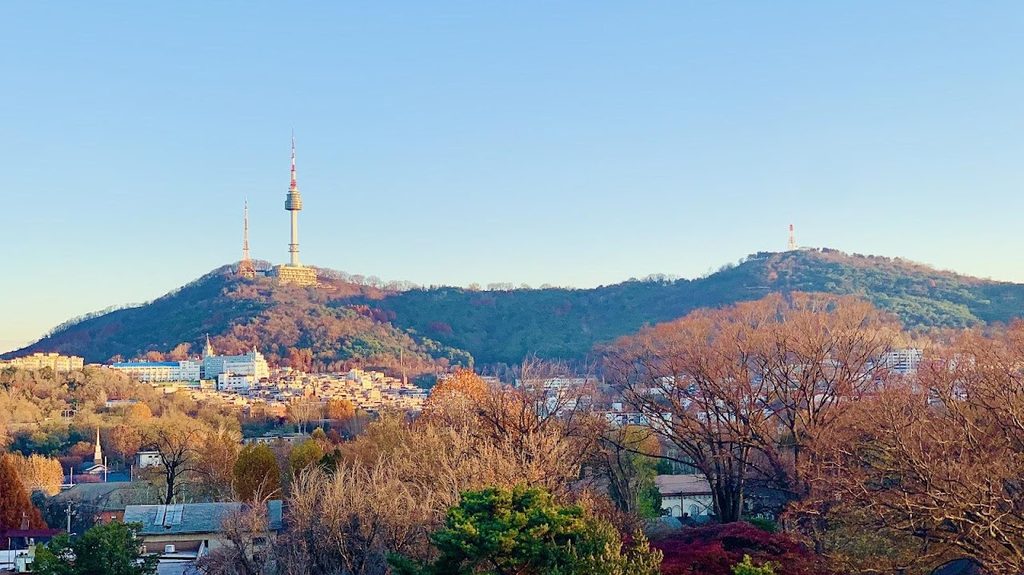
Our family loves the Dragon Hill Lodge. During fall, the views of the mountains and Seoul Tower are spectacular.
The coziness of the hotel, the apple fritters, and walks together in Itaewon with cocoa are memorable fall moments for our family.
Chungcheongnam-do in Fall
Chungcheongnam-do, or South Chungcheong Province, offers everything from historic homes and Buddhist temples to golden ginkgo trees and beautiful forests.
Nonsan’s Cultural Autumn Destinations
Nonsan offers several places where you can combine fall colors with Korean history and culture.
Baekje Military Museum
At Baekje Military Museum, you can see the spirit of loyalty and tradition in the monuments, structures, and museum artifacts dedicated to General Gyebaek.
General Gyebaek is remembered for his heroic battle where he and 5,000 of his men fought against 50,000 Silla troops.
The Baekje Military Museum is more than a building with paintings and artifacts. It’s a huge complex with parks, outdoor lending book libraries, relics, and items of cultural significance spread throughout.
You could easily spend an entire day here at the museum in Nonsan and love every minute of it! Sit in the gardens and enjoy!
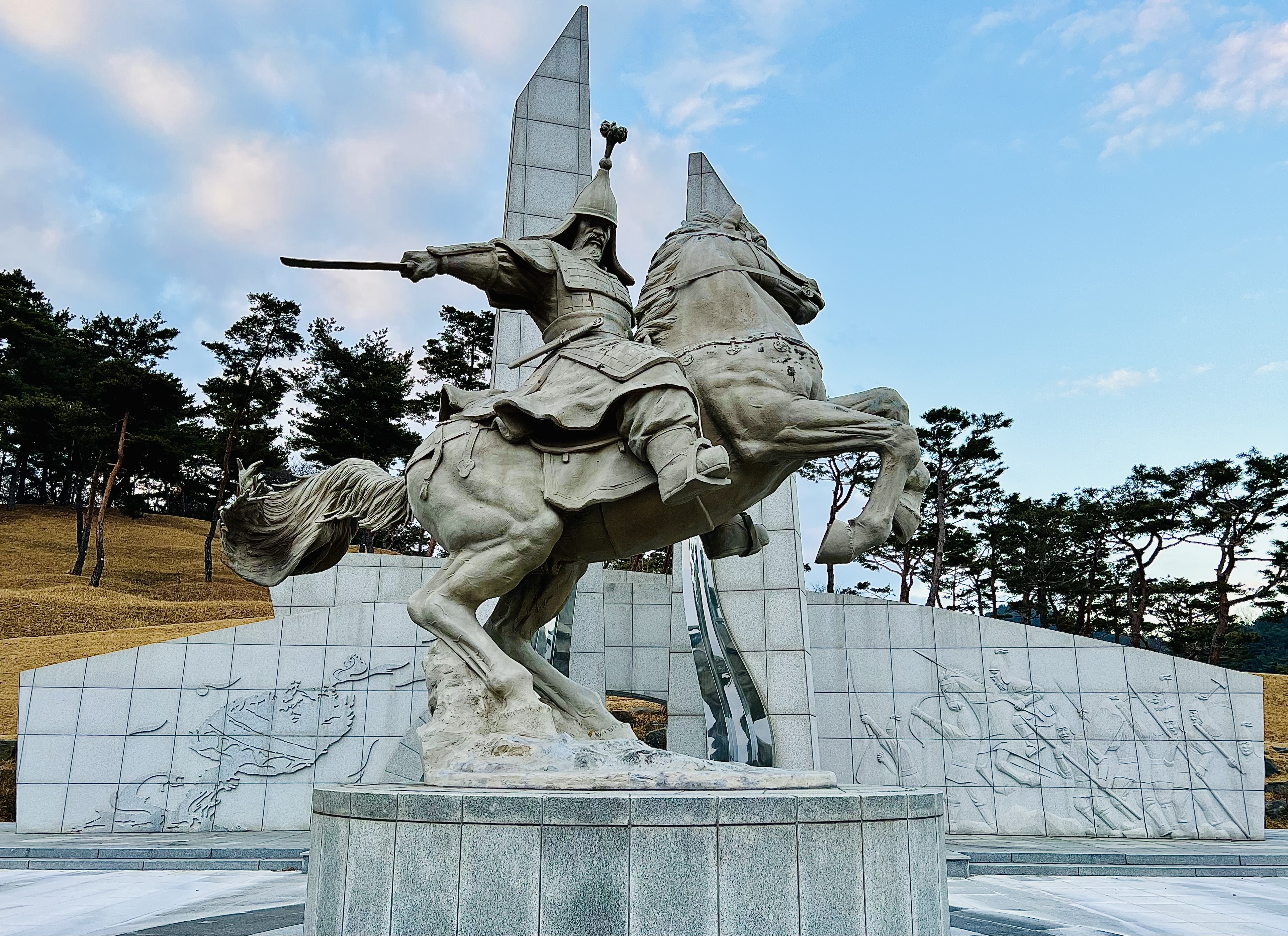
Baekje Military Museum
041-746-8433
Copy and paste phone numbers into Naver Maps to get directions
Hangul Name
백제군사박물관
Hangul Address
충남 논산시 부적면 충곡로 311-54 백제군사박물관
Description
Baekje Military Museum is a public museum in Nonsan, South Korea elucidating the military history of the later Baekje kingdom.
Nonsan Gwanchoksa Temple (관촉사)
Like many temples, Nonsan Gwanchoksa Temple is located at the foot of Banyasan Mountain. Mountainside locations mean trees in abundance that make a stunning backdrop for many of the cultural properties on the temple grounds.
Most notable is the 18-meter stone Buddha statue widely known as the Maitreya Buddha of Eunjin, or Eunjin Mireuk.
Built around 968 by monk sculptor Hyemyeong, it is the largest stone Buddha in Korea and is identified as a National Treasure. This makes Gwanchoksa worth adding to your Nonsan fall itinerary.
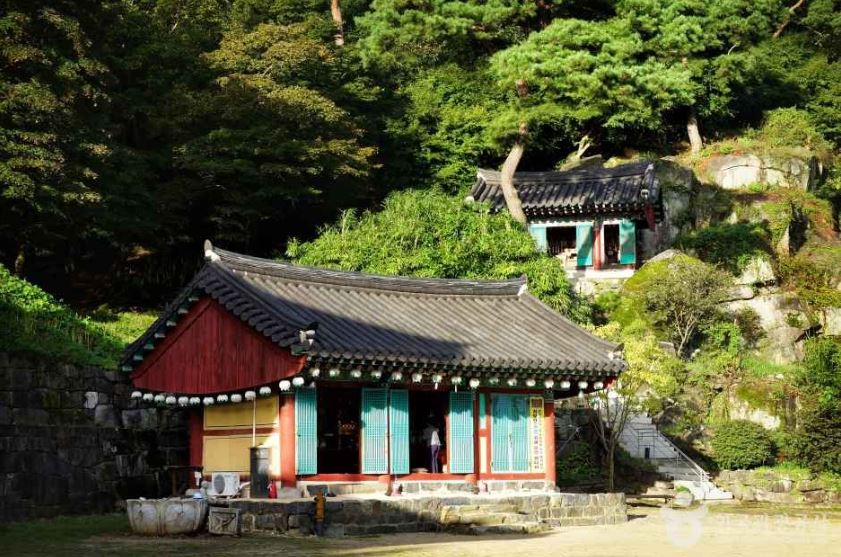
Nonsan Gwanchoksa Temple
041-736-5700
Copy and paste phone numbers into Naver Maps to get directions
Hangul Name
관촉사
Hangul Address
충남 논산시 관촉로1번길 25
Description
Nonsan Gwanchoksa Temple is located at the foot of Banyasan Mountain. Mountainside locations mean trees in abundance that make a stunning backdrop for many of the cultural properties on the temple grounds.
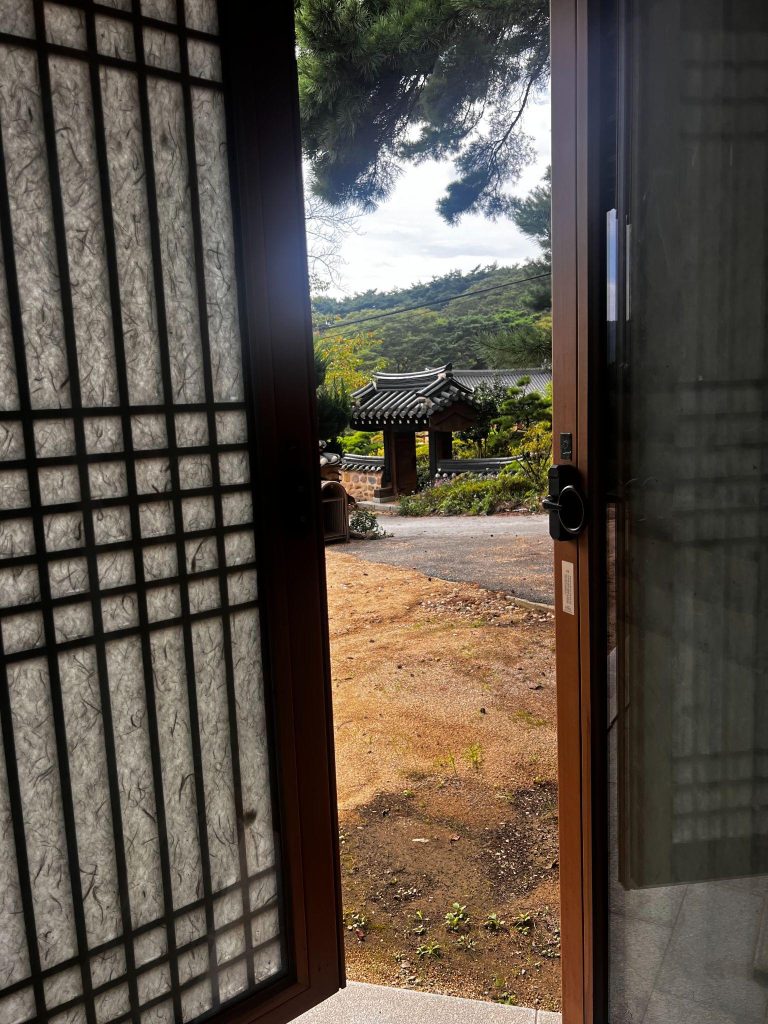
Myeongjae Historic House
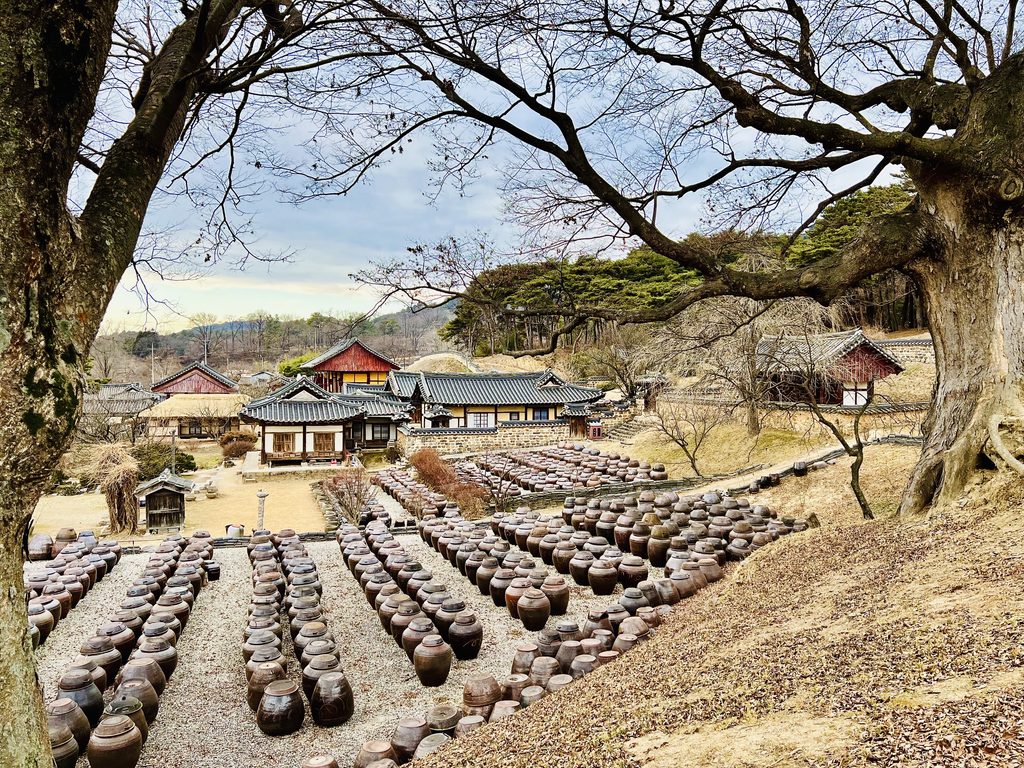
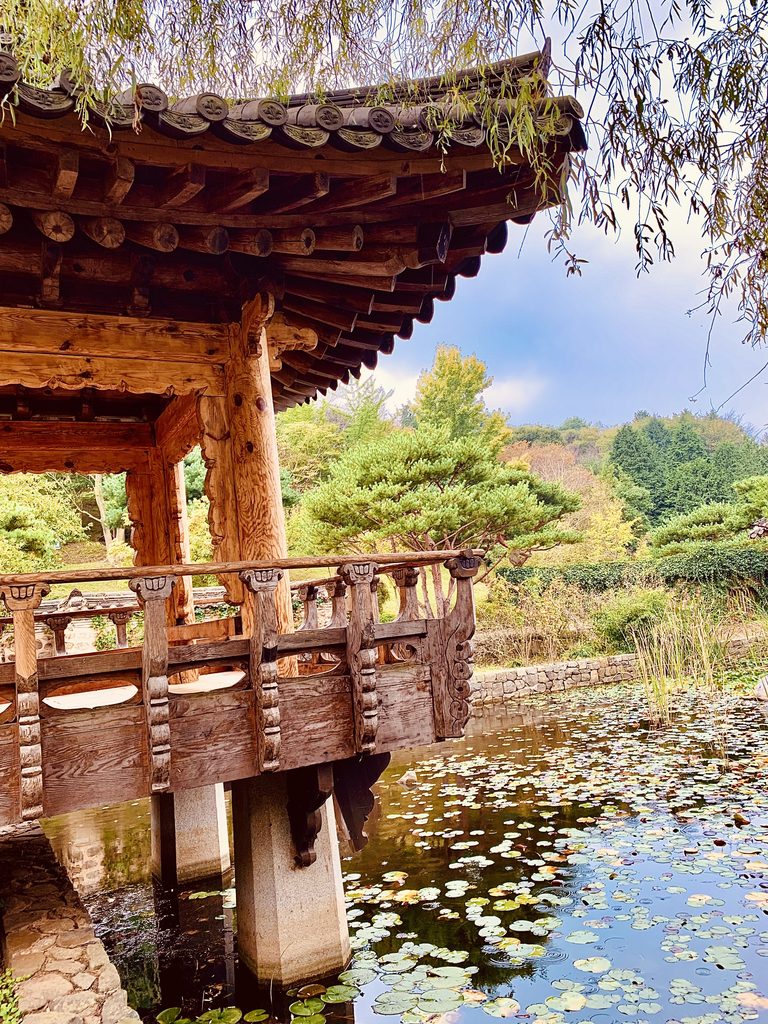
Myeongjae Historic House in Nonsan is part of Korea’s cultural heritage. The traditional residence, beautifully landscaped pond, and sprawling gardens add color and style, especially in fall.
Unfortunately, I was just a week too late for the leaves, but the warm tones were still present!
At the corner of the large yard, there are lots of jangdokdae that make the area even more beautiful. Jangdokdae refers to an outdoor space where large pottery jars are kept together. Inside these jars, traditional Korean sauces and pastes are fermented, including the famous ‘Gyodong Doenjang’ associated with Myeongjae Historic House.
The jars also make for stunning photos!
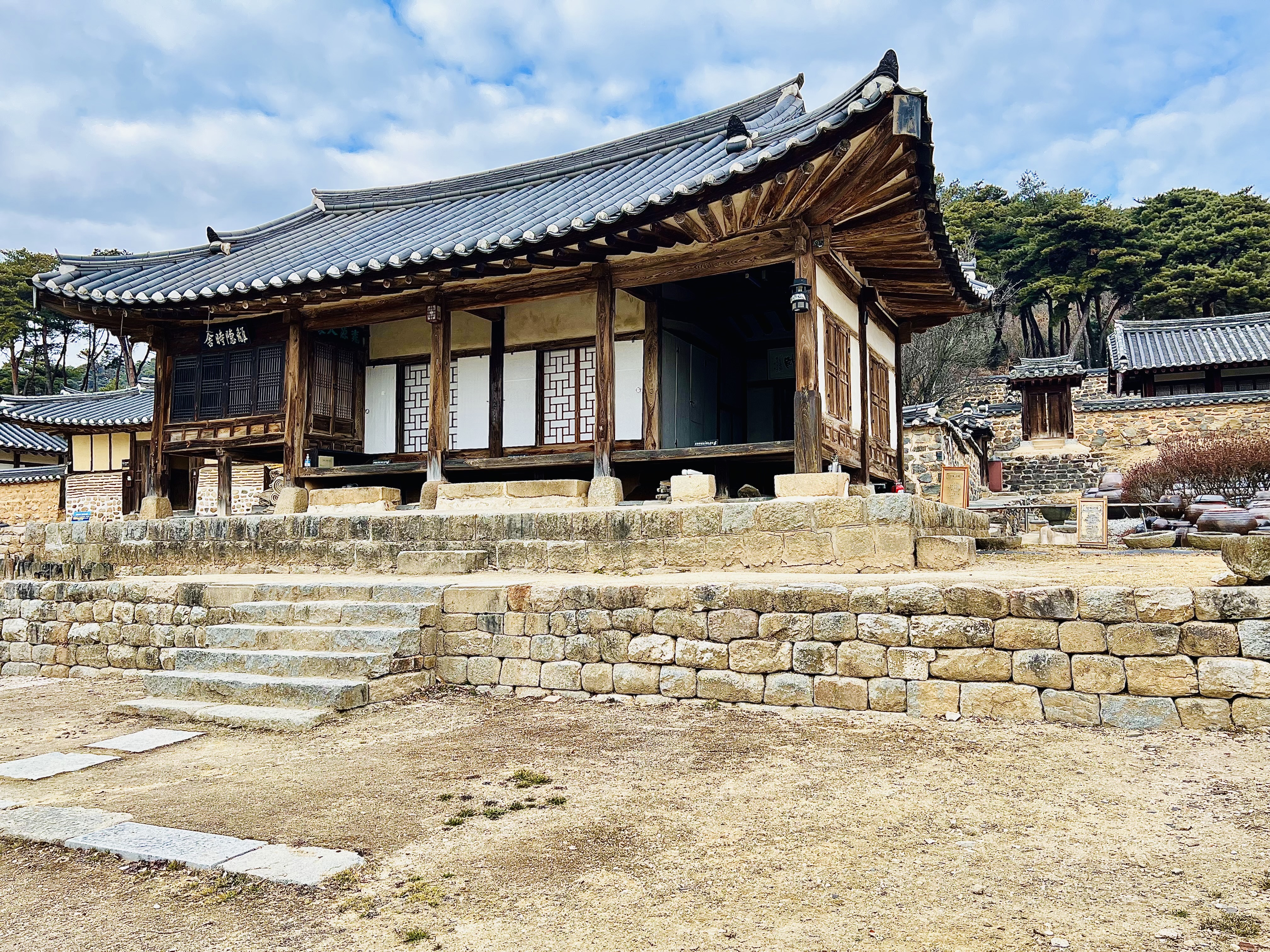
Myeongjae Historic House
041-735-1215
Copy and paste phone numbers into Naver Maps to get directions
Hangul Name
논산 명재 고택
Hangul Address
충남 논산시 노성면 노성산성길 50
Description
The Myeongjae Historic House is a significant cultural property located on the lower slopes of Noseong Mountain in Nonsan, South Korea.
Asan Gokgyocheon Stream Ginkgo Trail
While in South Chungcheong Province, don’t miss the scenic trail along the Gokgyocheon Stream!
Hundreds of ginkgo trees line the stream and pathways. Their green leaves turn to gold, creating the perfect fall backdrop.
Many people enjoy taking family photos here as the fall leaves seem to fall in abundance like rain.
Want to know more before you go? Check out our blog Autumn Leaves at Asan Ginkgo Tree Road to help you plan your visit.
And don’t stop exploring Asan once you’ve seen the ginkgo trees! Check out Top 10 Things to Do in Asan-si for even more ideas.
If the beautiful fall weather has you wanting to spend more time outside, explore Pinnacle Land Arboretum or lace up your hiking shoes and check out Three Mountains to Hike in Asan.
You can even add a little shopping to your adventure with a stop at First Village Mall in Asan.
There is plenty to do in Asan, so you can easily turn your fall foliage trip into an entire day of exploring!
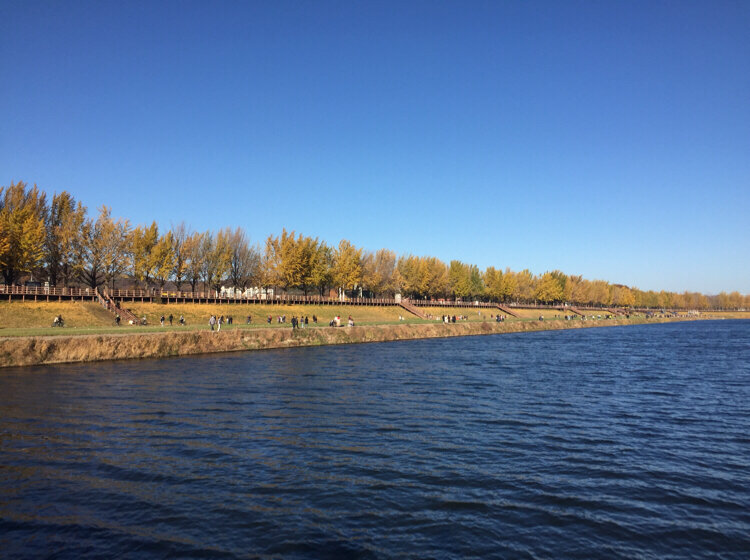
Asan Ginkgo Trail
000-000-000
Copy and paste phone numbers into Naver Maps to get directions
Hangul Name
Hangul Address
충남 아산시 염치읍 송곡리 71-9
Description
This park and trail along the river lights up yellow every fall. Address is to the parking facility 2 for the park.
Cheonan’s Autumn Beauty
Gakwonsa Buddhist Temple (각원사)
At Gakwonsa, a seated Amitabha Buddha sits atop the mountainsides of Cheonan. This temple offers a different perspective each season.
Spring brings gorgeous cherry blossoms, summer is lush and green, and winter offers a snowscape, but fall brings pops of color for miles!
This honored place is my favorite location in all of Korea. I come here quite often to meditate and to ground myself. Every duty station I aim to find a place where I can go and just be still.
This is my place, and I hope it can be for you what it has been for me.

Gakwonsa Temple
041-561-3545
Copy and paste phone numbers into Naver Maps to get directions
Hangul Name
각원사
Hangul Address
충남 천안시 동남구 각원사길 245
Description
Quiet Gakwonsa Temple is nestled at the foot of Mount Taejosan. Among the sights to see is a towering bronze Buddha, but there are also numerous nature trails winding through the forest and up the mountain. There are no admission fees, and there is plenty of parking. The temple is a lovely place to bring your family for an afternoon of exploration and reflection.
Cheonhoji Reservoir
As you leave Gakwonsa, check out Cheonhoji Reservoir, also known as Dandae Hosu (단대호수). The full official Korean name of the park area is 천호지 수변공원 (Cheonhoji Lakeside Park).
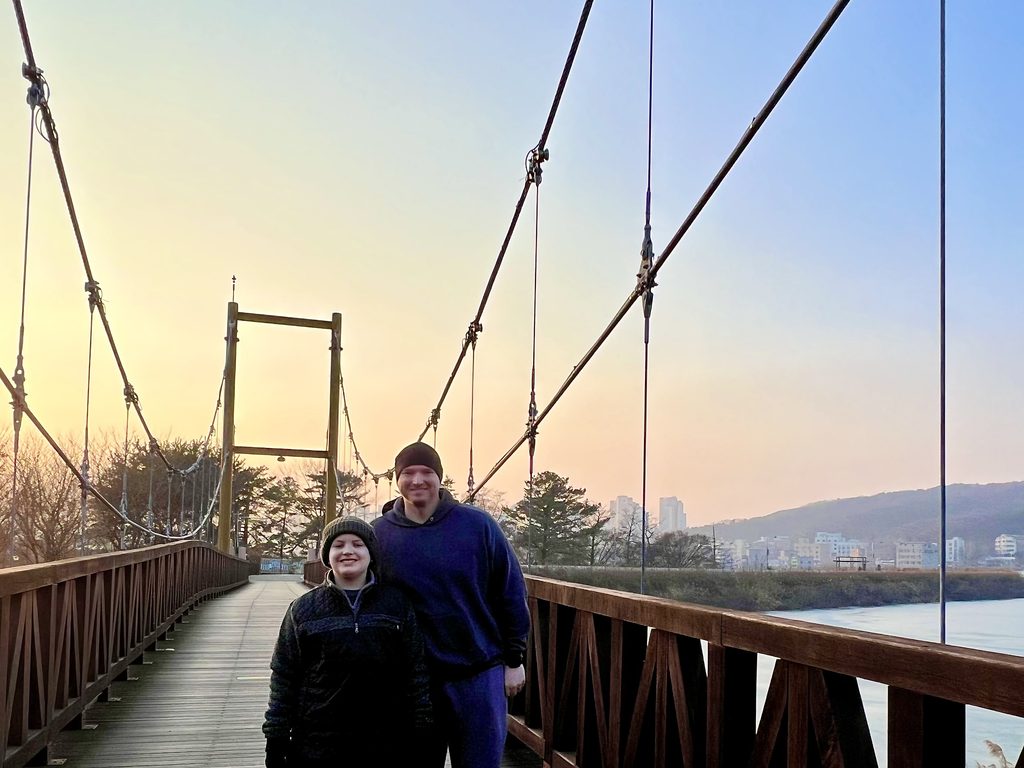
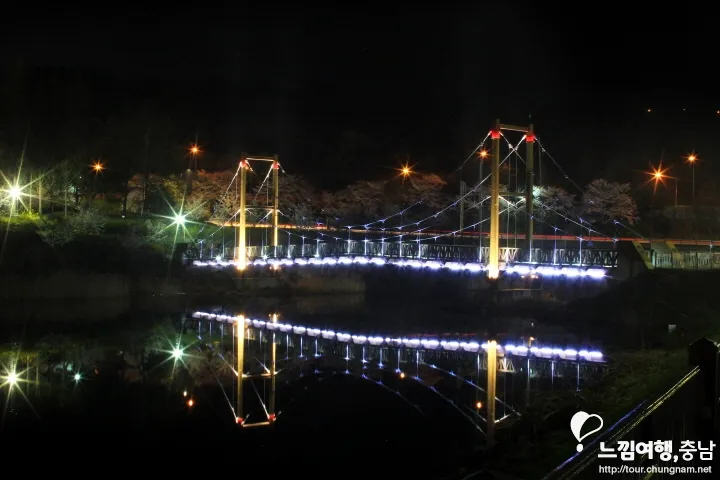
Around the waterfront is a trail and a small cable suspension bridge. Go at sunset for full views of the mountain’s fall leaves in the background and the beginning of the Cheonan nightlife!
Want to keep exploring? South of Seoul’s Top 10 Things to Do in Cheonan-si has even more ideas for turning your trip into a full day of adventures.
And if the weather decides not to cooperate, or you just want to add some shopping and food to your day, head over to Shinsegae Department Store in Cheonan.
There is always something else to discover in Cheonan!
Cheonhoji Reservoir/Dandae Hosu
Hangul Name
천호지
Hangul Address
충남 천안시 동남구 안서동 526-1
Description
Cheonhoji Reservoir, also known as Dandae Hosu (단대호수). The full official Korean name of the park area is 천호지 수변공원 (Cheonhoji Lakeside Park).
Around the waterfront is a trail and a small cable suspension bridge.
Taean and Anmyeondo Island
Anmyeondo Recreational Forest (안면도자연휴양림)
Korea is jam-packed with recreational forests, but each is unique.
On Anmyeondo Island in Taean, the Anmyeondo Recreational Forest is filled with pine trees and maples that seem to be hundreds of feet tall. While they may not be a hundred feet tall, many are over a hundred years old!
There are pavilions to take a rest, tables to have lunch with friends, multiple gardens, gurgling streams, and ponds with giant koi.
It’s the perfect place for walks, meditation, and exploration.
These forests take all your cares away with their beauty.
If you love capturing your adventures through your camera lens, check out these Photography Lovers’ Destinations in Taean-gun. You can also dig deeper into the area with Historical Sights in Taean-gun and Immersive Cultural Experiences in Taean.
Of course, you can’t talk about Taean without talking about the coast! If you want to add some ocean views to all those beautiful fall colors, check out West Coast Beaches in Taean.
Not ready to go home yet? Make it an overnight adventure! Fall is a wonderful time to get outside, and Car Camping in Taean can help you start planning.
Whether you come for the forest, history, culture, photography, or an overnight camping adventure, Taean gives you plenty of reasons to stay and explore!

Anmyeondo Recreational Forest
041-674-5019
Copy and paste phone numbers into Naver Maps to get directions
Hangul Name
안면도자연휴양림
Hangul Address
충남 태안군 안면읍 안면대로 3195-6
Description
Opened in September 1992, the area covers an area of 1.75 million square meters.
Adult 1,000 Won
Youth & Military 800 Won
Child 400 Won
Parking 1,500 to 5,000 Won, depending on size
Next to Anmyeon Arboretum and O My Gallery
Daejeon in Fall
Jangtaesan Natural Recreation Forest
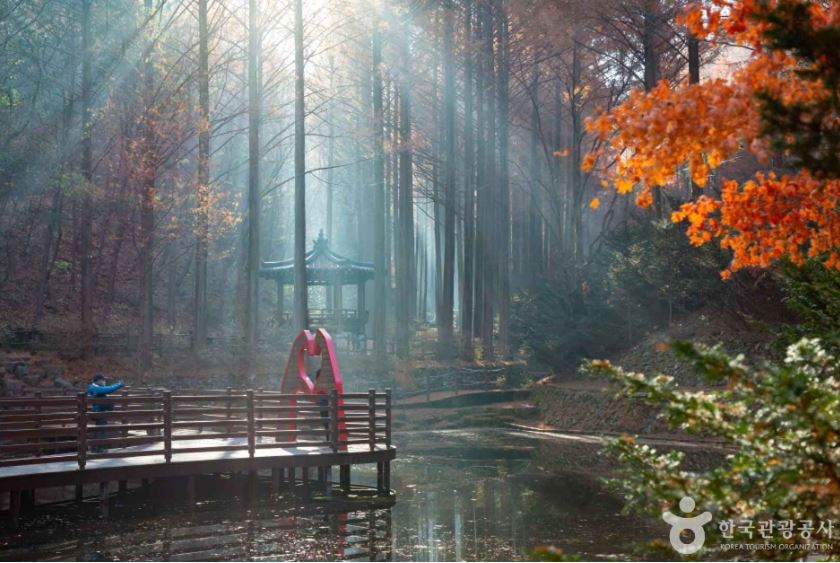
The fall colors of Jangtaesan Natural Recreation Forest in Daejeon can’t be beat.
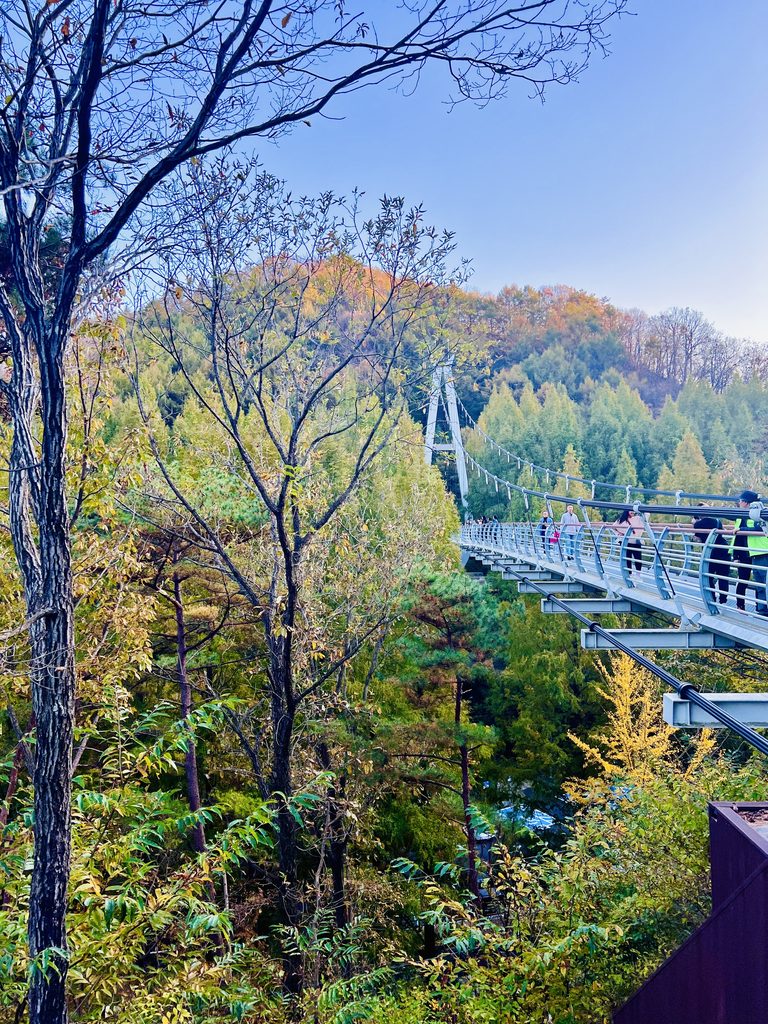
The metasequoia and redwoods are majestic here and tower above everyone. The metasequoia trees were established in 1973, creating a dense forest. Many come to this recreational forest to walk on the trails that are up in the trees on bridges and platforms.
It’s like a forest skywalk, making you feel like a bird flying in the trees!
Come midday and stay until sunset. It is beautiful. They also have beautiful ginkgo and cypress trees adding to the beauty of the area.
Keep in mind that fall and winter hours can mean recreational forests close earlier, so check current operating information and make sure the paths you want to explore will be open when you arrive.
If you’re making the trip to Daejeon, why stop with just one adventure? Check out these 5 Things to Do in Daejeon and find a few more places to add to your day!
Jangtaesan Natural Recreation Forest
Hangul Name
장태산 자연휴양림
Hangul Address
대전 서구 장안로 461
Description
Jangtaesan Recreational Forest consists of a dense forest of ginkgo trees and bald cypress. Lush valleys nearby make for a great getaway during summer vacation. Yongtaeul Reservoir, located at the entrance, gives beautiful views as well. Inside the natural recreation forest, various facilities including walking paths, physical activity facilities, a botanical garden and bare-foot walking paths are available for visitors.
Gyeongsangbuk-do in Fall
North Gyeongsang Province combines some of South Korea’s most fascinating historic destinations with incredible fall scenery.
Andong Hahoe Village (안동 하회마을)
Step back in time at Andong Hahoe Village!
This isn’t just a folk village made for tourists. It’s an ancestral homeland. Descendants of the Pungsan Ryu clan still make up much of the village. And the families still live, farm, and care for the land here.
It is a must-see.
If you want to see beautiful fall colors around the Nakdonggang River, persimmon trees with growing fruit, and buildings from the Joseon Dynasty, visit Andong!

Andong Hahoe village
Description
This village is an old neighborhood that some residences still live in. You can either rent a golf cart or walk around the neighborhood with thatch roofs.
Samsindang Zelkova Tree
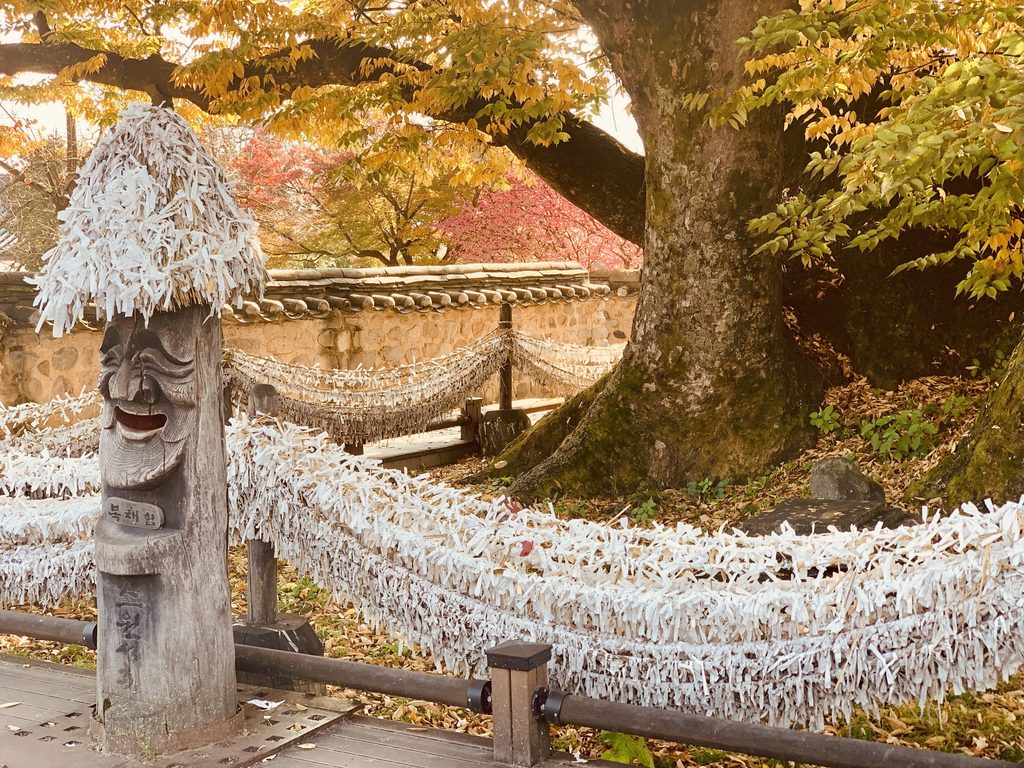
Andong Hahoe Village is also home to a centuries-old great zelkova tree named Samsindang.
According to tradition, Samsin, associated with birth and fertility, is connected with the great zelkova tree. People come here to pray for their children, in hopes of having a child, or for well-being and a bountiful harvest.
White pieces of cloth containing prayers adorn the area around this famous tree, whose leaves change colors in the fall.
Ancient History and Fall Colors in Gyeongju
Gyeongju in October and November is another favorite for many.
The city served as the capital of the Silla Kingdom, and we spent a few days exploring its many cultural sites. Several will give you an incredible “fall in South Korea” experience.
Cheomseongdae (경주 첨성대)
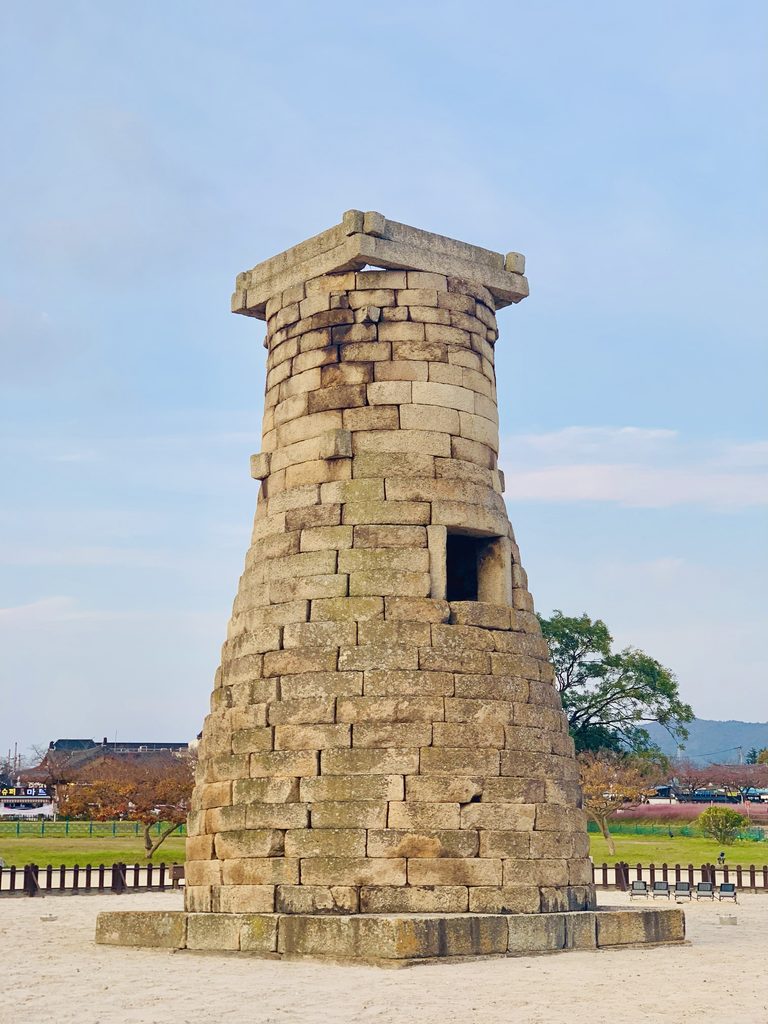
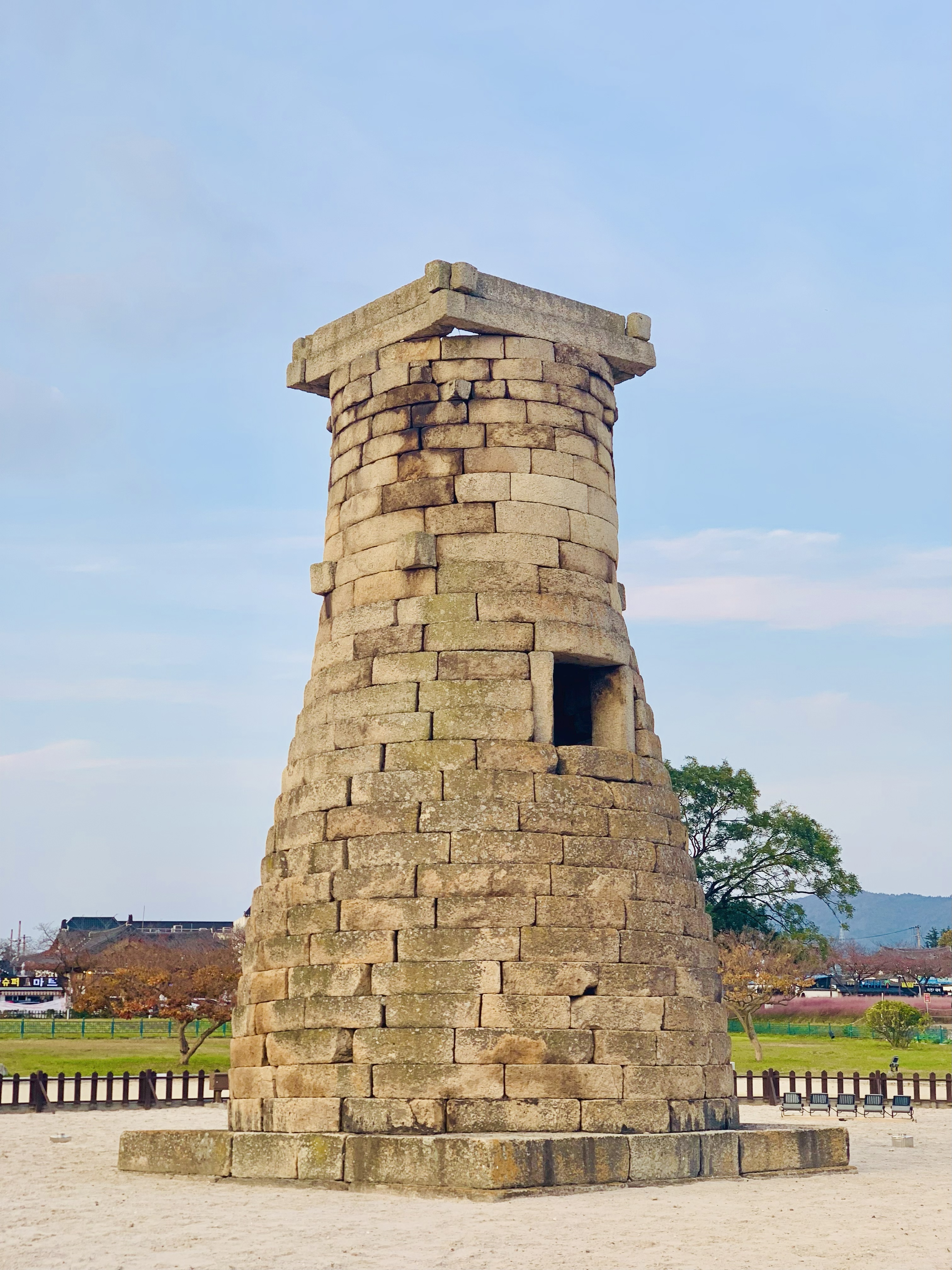
Cheomseongdae Observatory is for looking at the stars. This observatory is considered to be the oldest surviving astronomical observatory in East Asia.
The historic structure and surrounding area make this a popular stop while exploring Gyeongju, especially when the surrounding landscape takes on its fall colors.
Cheomseongdae Observatory
Hangul Name
경주 첨성대
Hangul Address
경상북도 경주시 인왕동 839-1
Description
Cheomseongdae is an astronomical observatory in Gyeongju, South Korea. Cheomseongdae is the oldest surviving astronomical observatory in Asia, and possibly even the world.
Daereungwon Tomb Complex (경주 대릉원 일원)
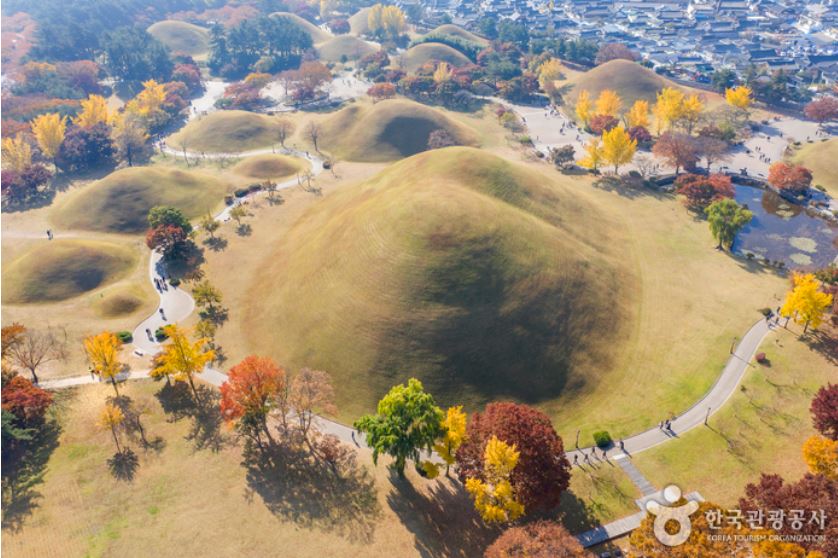
Nearby, Daereungwon Tomb Complex offers visitors the opportunity to explore enormous ancient burial mounds that serve as a fascinating reminder of Gyeongju’s royal past during the Silla Dynasty.
Cheonmachong is the only tomb currently open to visitors. The combination of ancient history, enormous grassy burial mounds, trees, and fall colors makes this area beautiful to explore on foot.
Daereungwon Tomb Complex
Hangul Name
경주 대릉원 일원
Hangul Address
경상북도 경주시 황남동 31-1
Description
Gyeongju Daereungwon Tomb Complex consists of five tombs, Ancient Tombs of Gyeongju Nodong-ri, Noseo-ri, Hwangnam-ri, Hwango-ri, and Inwang-ri.
Bulguksa Temple
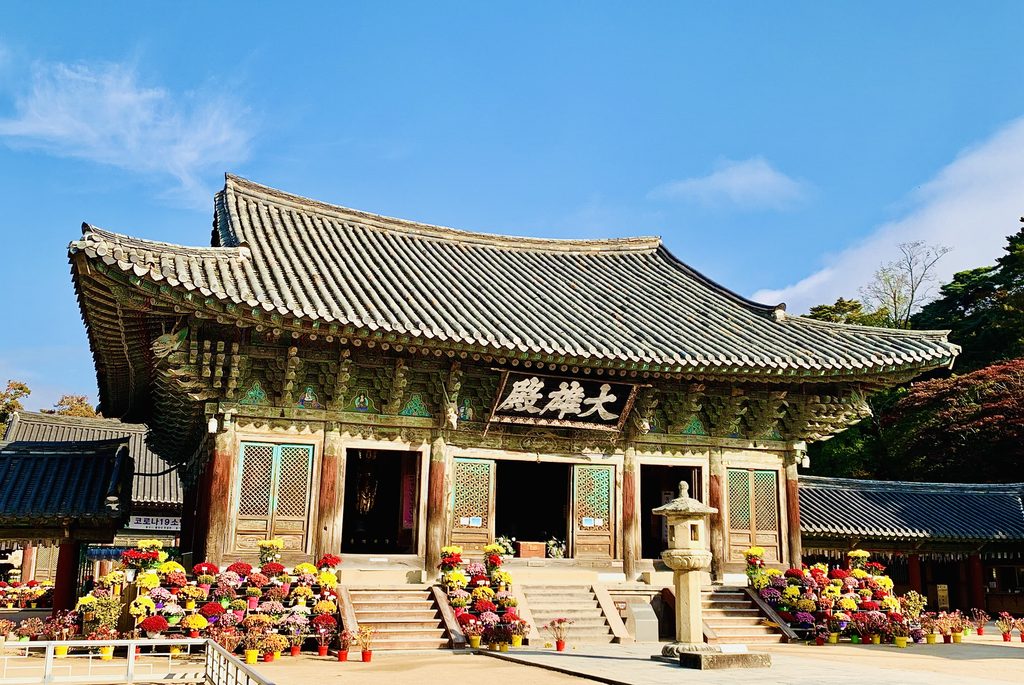
Bulguksa Temple should be near the top of everyone’s itinerary for this area!
The surrounding hills offer jaw-dropping views. The changing leaves seem to paint a natural mural along the clear blue sky.
The temple is on a mountain and offers many lookout areas that stretch for miles. The temple also has many gardens and ponds to allow you time to center yourself, breathe in the clean air, and soak in the colors all around! There also is a National Museum on the property that is worth checking out!
Expect to spend some time here if you want the full fall experience.
Seokguram Grotto
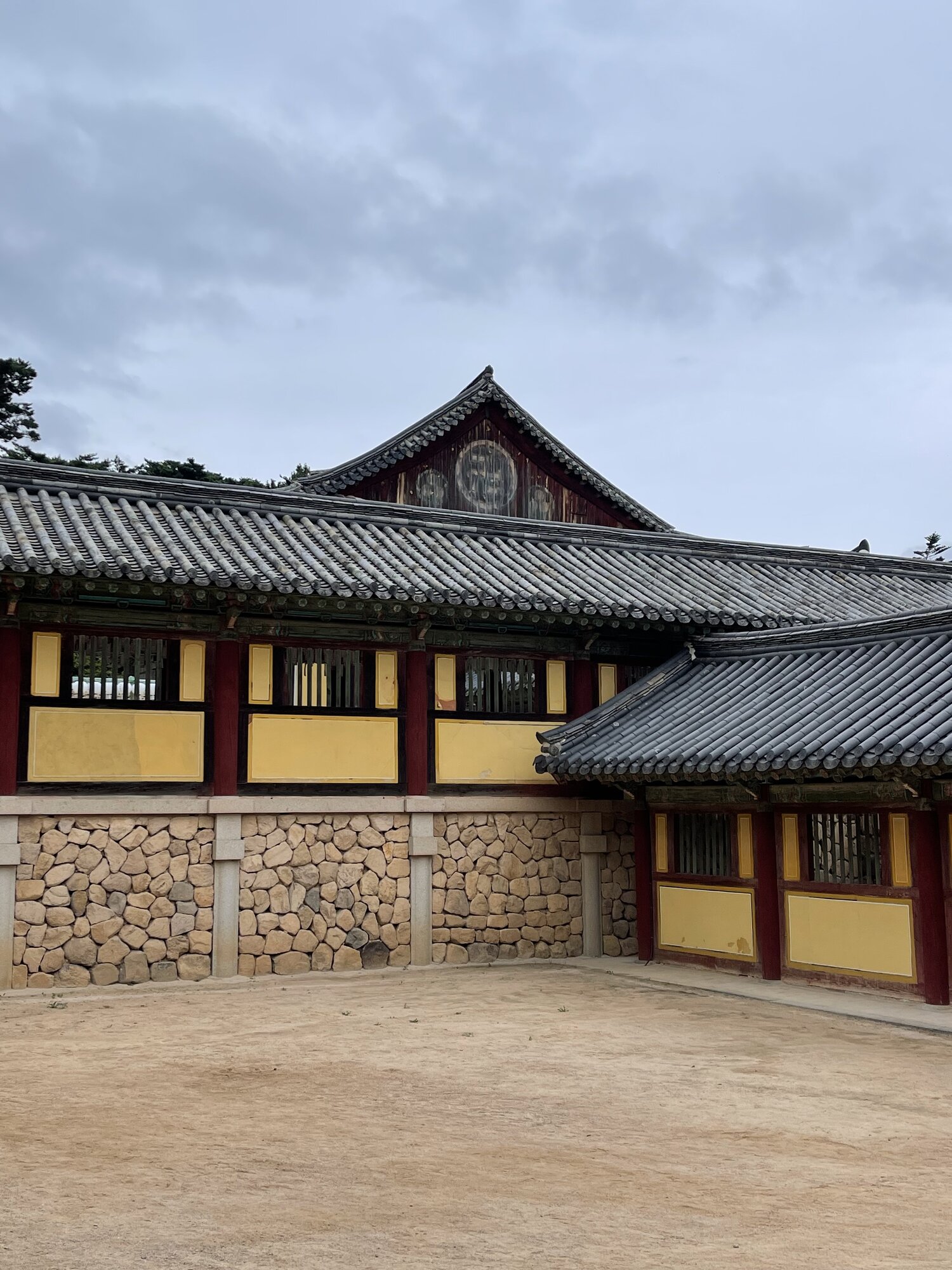
While exploring the area, make sure to visit Seokguram Grotto. The grotto was originally called Seokbulsa, meaning “Stone Buddha Temple,” and is said to have been built by Kim Daeseong during the Unified Silla period. Construction began around 751 and was completed by the Silla court in 774, shortly after Kim’s death.
Today, Seokguram Grotto is one of South Korea’s best-known cultural destinations, and once you visit, it is easy to understand why! The seated Buddha surrounded by the stone carvings inside the grotto is incredible, but don’t forget to take in the scenery around you too.
The grotto sits high on the mountain overlooking the East Sea, and the sunrise views from the area are especially popular. Imagine starting a fall morning surrounded by mountain colors while watching the sun rise over the sea!
Pair Seokguram with Bulguksa Temple and you have a beautiful day filled with Korean history, culture, mountain views, and fall scenery.
Gangwon-do in Fall
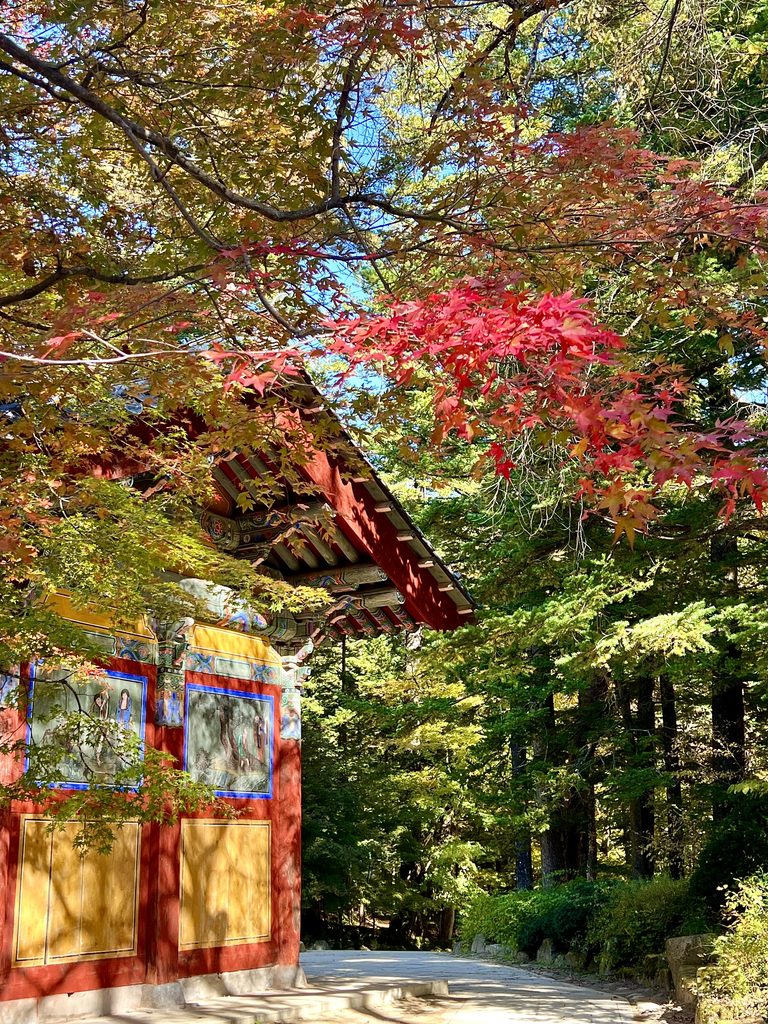
If you’re chasing dramatic mountain scenery and fall colors, Gangwon-do deserves a spot on your autumn travel list.
Woljeongsa Temple in Pyeongchang
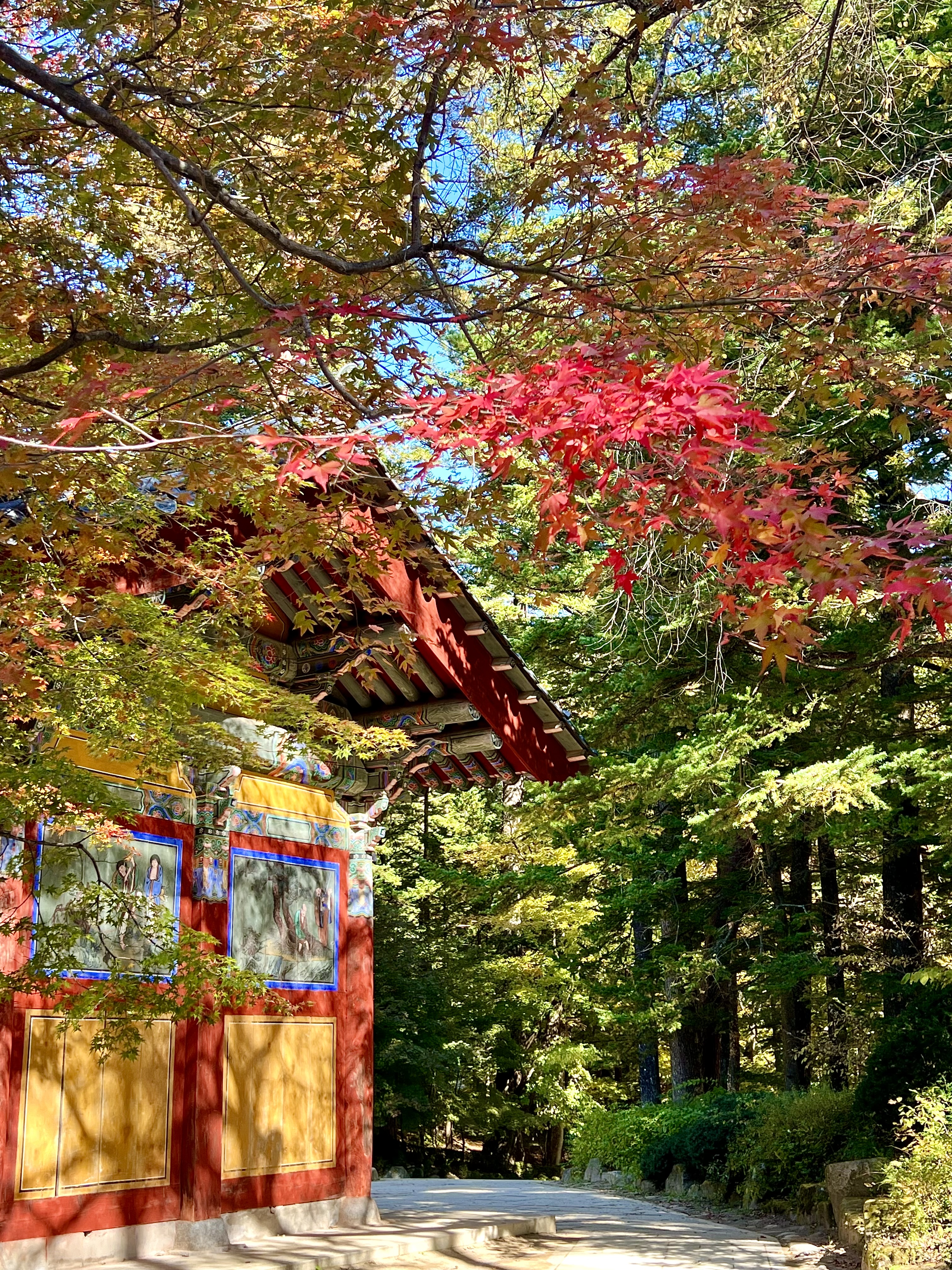
Woljeongsa 월정사 is a head temple of the Jogye Order of Korean Buddhism, located on the eastern slopes of Odaesan in Pyeongchang County, Gangwon Province, South Korea. The 1-kilometer path leading to the temple passes through a forest of tall fir trees.
Woljeongsa Temple is in charge of over 60 temples and 8 monasteries in the area. Woljeongsa Museum is also located within the temple grounds, displaying artifacts and treasures from the Buddhist culture of the Goryeo dynasty (918-1392), including an octagonal nine-story stone pagoda and a stone seated bodhisattva.
Combine the forest with the temple grounds, mountain scenery, and fall colors, and you have a beautiful autumn destination.
Woljeongsa Temple
033-339-6800
Copy and paste phone numbers into Naver Maps to get directions
Hangul Name
월정사
Hangul Address
강원특별자치도 평창군 진부면 오대산로 374-8
Description
Woljeongsa Temple, established in 643 during the Silla dynasty, is located on Odaesan Mountain. It's renowned for its historical and cultural treasures, including an octagonal nine-story stone pagoda from the Goryeo era
Seoraksan National Park
To say Seoraksan is massive is an understatement. You could spend a week there and still discover new areas. Seoraksan Mountain Natural Reserve spans over 173.7 km², across the Inje, Yangyang, and Sokcho areas in Gangwon Province.
The sheer variety of plants and trees makes Seoraksan a spectacle during fall! About 1,013 species of plants and trees call Seoraksan home.
There are hiking paths for different ability levels, but one of our favorite ways to see the fall colors is by cable car. Seoraksan Cable Car 설악산 케이블카 travel distance is 1,132 meters and it takes 10 minutes to reach the top.
Atop the mountain, you can see the Buddha and all the trees! South Korea LOVES cable cars, and we have enjoyed seeing so many mountains and oceans from the air!
Operating hours for this are usually announced on their website one day in advance. Cable car operations can change depending on weather and conditions, so check current operating information before making your plans.

Seoraksan National Park
Naksansa Temple
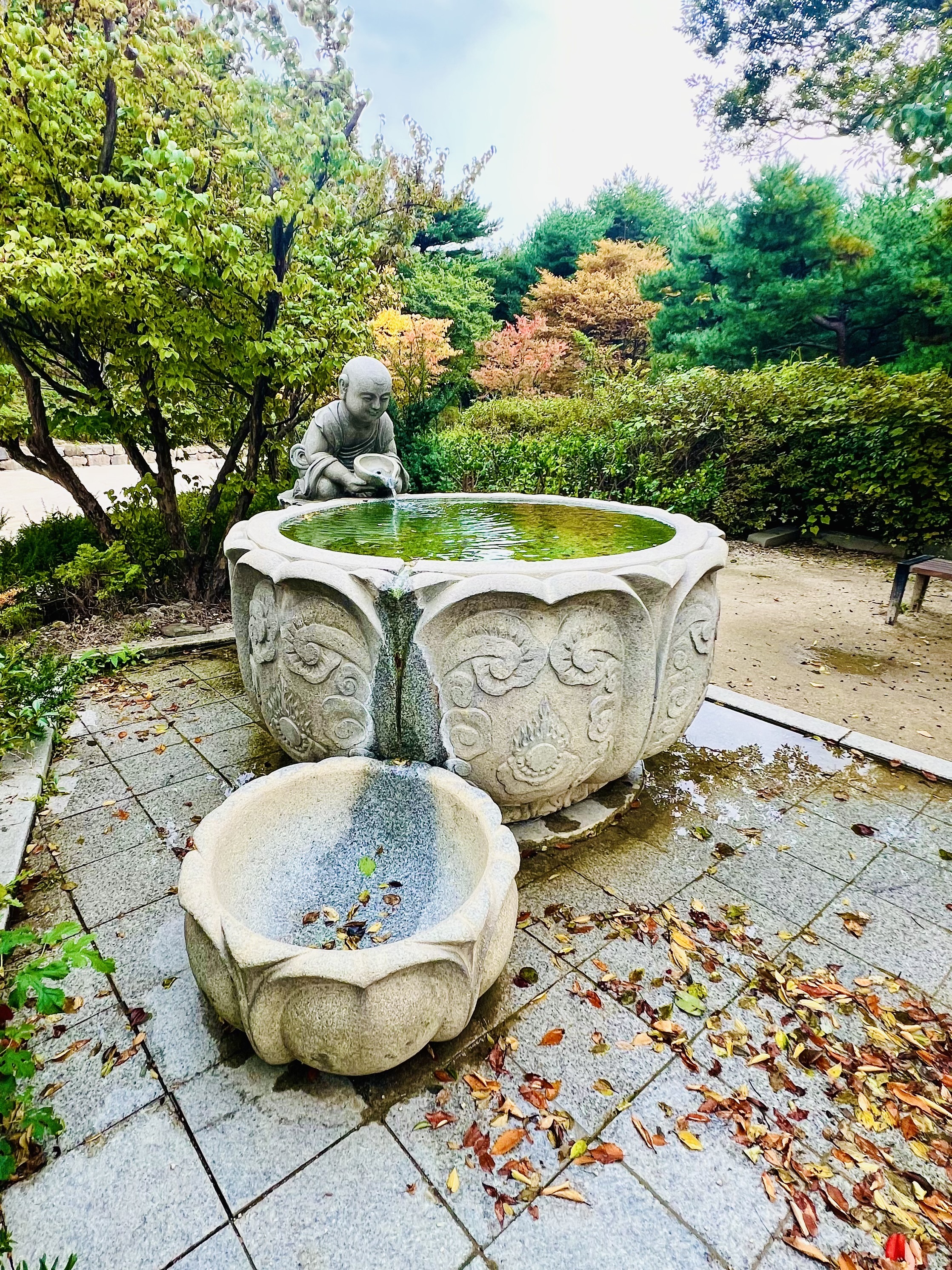
Naksansa Temple, founded in 671 by the great Venerable Master Uisang, combines Korean Buddhist history with incredible coastal scenery. Naksan is an abbreviation of Botanakgasan in Korean to refer to “Potalaka Mountain”, where the Avalokitesvara Bodhisattva is believed to live, so Naksan is also known as Korea’s Potalaka Mountain.
From Naksansa, you can see the Seoraksan Mountains in the distance in one direction and the East Sea in the other.
The priceless views make exploring the temple grounds very pleasant and memorable!
Naksansa Temple
Hangul Name
낙산사
Hangul Address
강원특별자치도 양양군 강현면 낙산사로 100
Description
This ancient temple was built in the 11th year of King Munmu’s reign of Silla (671) by the Buddhist monk Uisang. Naksansa Temple is one of the foremost sights of Yangyang, and one of the most historic sites in the region.

LEGOLAND Korea Resort in Chuncheon
Be a kid again at LEGOLAND. Fall is also for fun, after all!
If you want a Halloween-style fall experience like in the States, LEGOLAND can be a fun September or October adventure.
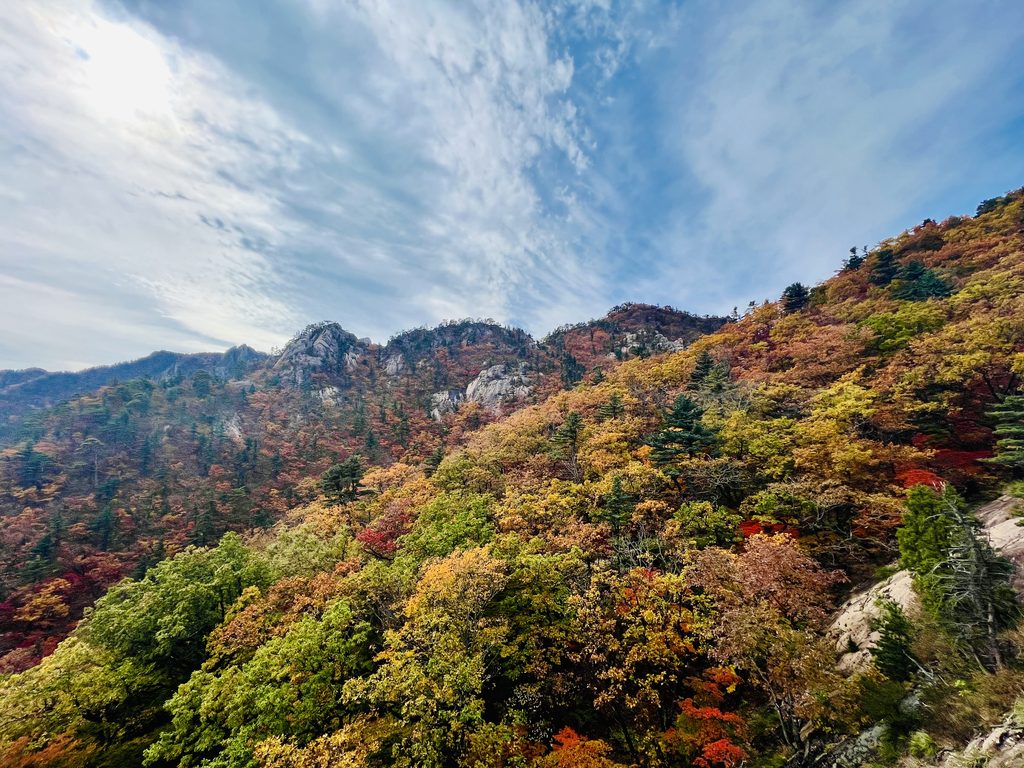
We used a teacher work/student holiday to make the best of a weekday with low crowds. The colors of fall are very vibrant in the northern part of South Korea, and the drive will leave you wanting to stop for pictures all along the way!
Once at LEGOLAND, you will feel the kid in you come alive again with the jack-o’-lanterns and Halloween-themed experiences. There were holiday LEGOs to collect and trade with staff and so many fall photo opportunities!
The kids had a blast and weren’t exhausted from the heat, so I’d say it was a win all around!
We plan to go back for more LEGO-themed escapades!
Seasonal Halloween events and activities change each year, so make sure to confirm before visiting.

Legoland Korea
033-815-2300
Copy and paste phone numbers into Naver Maps to get directions
Hangul Name
레고랜드 코리아
Hangul Address
강원도 춘천시 하중도길 128
Description
LEGOLAND Korea Resort is a global Lego-themed amusement park and hotel located on Hajungdo Island in Chuncheon, Gangwon-do, South Korea.
Planning Your Fall Adventures in South Korea
Before heading out to enjoy the autumn foliage in South Korea, check current operating hours and seasonal information for each destination. Fall is a popular time to travel, especially when the leaves reach their peak colors, so popular destinations can become busy on weekends.
Temperatures can change throughout the day, particularly in the mountains. Dress in layers, wear comfortable shoes, and give yourself plenty of time to explore. After all, you never know when you might find somewhere worth stopping along the way!
If you’re traveling somewhere new, save the Korean name of your destination. This makes searching for locations in Korean navigation apps much easier. Naver Maps is especially helpful for finding destinations and getting directions for driving, walking, biking, and public transportation. If you’re still learning how to use it, check out Navigating Korea Using Naver Maps before your next adventure.
And don’t forget about 1330! Korea’s tourism help service can be incredibly useful when you need travel information or help figuring out your next stop. Learn more about this resource in 1330 Korean Help Line.
Most importantly, don’t feel like you have to visit only the famous fall destinations. Some of our favorite memories have come from simply getting outside and exploring somewhere new.
Having a few helpful tools and a little flexibility makes it much easier to enjoy the adventure!
Frequently Asked Questions About Fall Foliage in South Korea
When is the best time to see fall foliage in South Korea?
Fall foliage season generally begins in the northern mountains in October and gradually moves south. Many destinations around Seoul, Pyeongtaek, and central South Korea show their most beautiful colors from late October into early November. Peak dates vary each year, so check the latest foliage forecasts before planning your trip.
Where can I see fall foliage near Camp Humphreys and Pyeongtaek?
You don’t have to travel far to enjoy autumn colors! Nae-ri Cultural Park and Simboksa Temple are wonderful places to start. If you’re ready for a longer adventure, consider exploring Gakwonsa Temple in Cheonan, the ginkgo-lined Gokgyocheon Stream in Asan, or Everland in Yongin.
What are the best places to see autumn leaves in South Korea?
Some of the most beautiful places to enjoy autumn leaves include Seoraksan National Park, Jangtaesan Natural Recreation Forest in Daejeon, Gyeongbokgung Palace in Seoul, Andong Hahoe Village, and Bulguksa Temple in Gyeongju. Each destination offers a different combination of fall colors, scenery, history, and culture.
Can I enjoy fall foliage in South Korea without hiking?
Absolutely! You don’t have to climb a mountain to enjoy the beautiful fall colors. Explore the gardens and grounds of Gyeongbokgung Palace, walk along the ginkgo-lined paths in Asan, enjoy the scenery at Nae-ri Cultural Park, or take in the seasonal decorations and colorful surroundings at Everland. Seoraksan also offers a cable car for visitors who prefer a different way to experience mountain scenery, although some walking is still involved.
What should I bring when exploring South Korea in autumn?
Fall temperatures can change throughout the day, especially in mountainous areas. Dress in layers, wear comfortable walking shoes, and bring water and a charged phone. Save your destination’s Korean name in Naver Maps, and check current operating hours, weather conditions, and seasonal information before heading out.
Final Thoughts on Autumn in South Korea
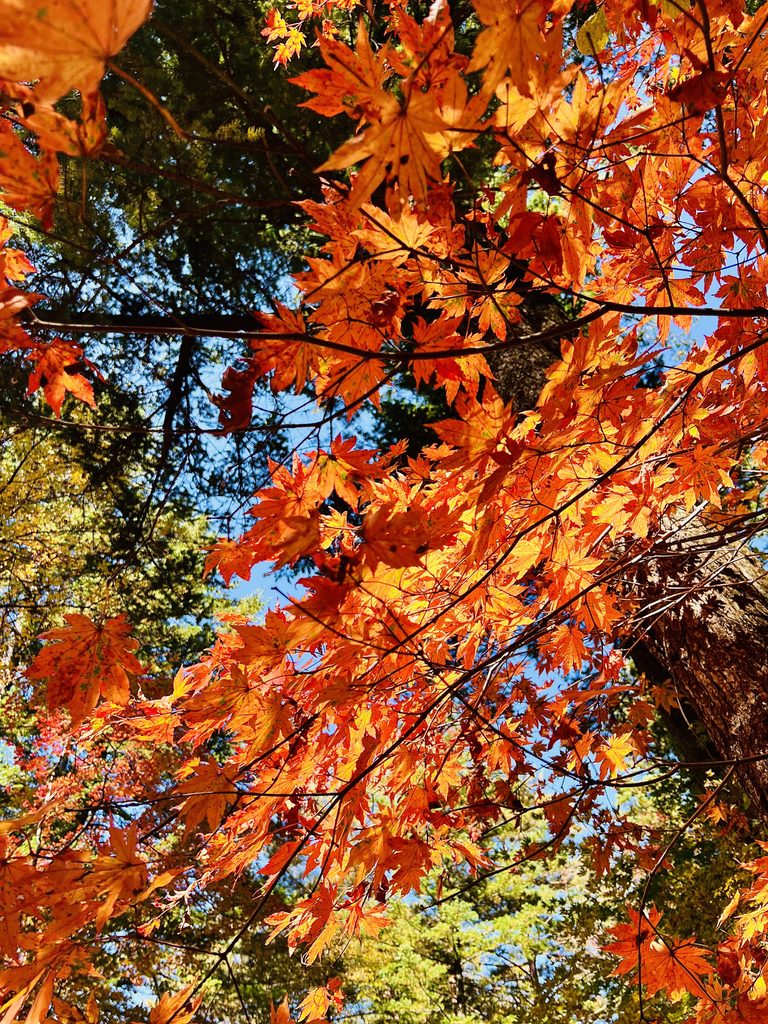
Fall is fabulous, from historical and cultural places to amusement parks!
For me, it became the gift I didn’t know I needed and one of my favorite times of year to get outside and explore South Korea.
Find somewhere that sparks your adventurous spirit, get out there, and start making memories that will last a lifetime!
Article Information & History
Article History
No formal audit has been recorded for this article under the current South of Seoul editorial process.
Relationships & Disclosure
- Contributor relationship
- None Disclosed
- South of Seoul relationship
- None / Independent Editorial
- Material benefit
- None
A contributor's independent relationship does not mean South of Seoul or KoreaQuest received payment for publication.
Verification Notes
Sources / verification: Naver Maps, Korea Travel Guide, Visit Korea Website
Before You Act
South of Seoul articles document information available at a particular point in time. Prices, hours, services, policies, procedures, laws, eligibility requirements, transportation, contact details, and local conditions can change.
Use this article as a research starting point and confirm important details using current official resources, direct contact, Naver Maps, Kakao Map, and other reliable sources when appropriate.
For consequential immigration, legal, medical, or financial decisions, confirm current requirements with the relevant official authority or an appropriately qualified professional.
See something that needs updating?
Help us keep practical information useful. Reader reports are reviewed by our editorial team and do not automatically change this article.

 KimchiRednecks
 Lanae Rivers-Woods, MAIT
 South of Seoul
 South of Seoul