ContentsView article sections
Looking for a quick cheat sheet for finding accidentally vegan items in Korea? You came to the right place. Here is a quick list of keywords and tools you need to use when reading Korean food labels.
The Struggle to Shop for Vegan Food in Korea
Good news! Vegan staples such as produce, rice, beans, and tofu are very easy to come by in all parts of Korea. However, products such as clearly labeled vegan meat alternatives, egg substitutes, and dairy substitutes may be harder to find depending on where you live. This is why learning how to identify accidentally vegan items can make following a vegan diet easier.
Likewise, it’s always annoying to think something is vegan “because it should be” according to Western culinary traditions and then it turns out not to be in Korea. This is why if you want to eat a vegan diet in Korea, you need to be able to read the labels. This post will give you the easy-to-spot vocabulary you need to do this even if you can’t speak Korean.
Checking Ingredients of Packaged Foods
Let’s start with the hard part. Learning to identify Korean vocabulary for non-vegan ingredients commonly found in foods. Here are some words to look for on the ingredients list.
Hangul Words for Key Ingredients
You can copy and save these to your phone for later when you are at the Corner Mart or grocery shopping:
- Milk: 우유
- Egg: 계란
- Meat, chicken, fish, pork, beef, shrimp, oyster, anchovy, seafood, crab: 고기, 닭고기, 생선, 돼지고기, 소고기, 새우, 굴, 멸치, 해산물, 게
- Gelatin: 쇠고기/ 돼지고기, 젤라틴
Now let’s look at how we can make this easier.
Using Papago to Read Labels
If reading ingredients feels too hard, you can take images of the packages and use apps like Papago to read the food labels. Below you see an example of flavored mixed nuts found at a variety of stores across Korea. Can you see the non-vegan ingredients?
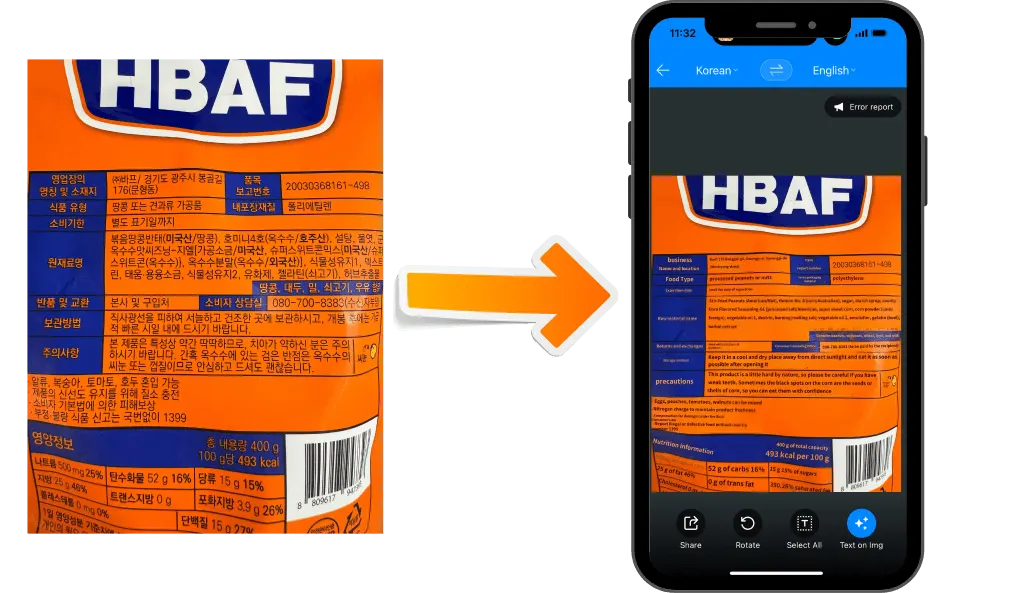
If you can’t easily find the non-vegan ingredient, consider using an AI tool to help analyze the labels.
Using ChatGPT to Analyze Labels
For example, you can upload the same photo of a food label to ChatGPT and ask it to analyze if the product is vegan. Below you can see that ChatGPT can provide far more detail and specific information. As you can see, ChatGPT clearly clarifies that these flavored peanuts contain animal gelatin. This wasn’t as easy to identify with Papapgo.
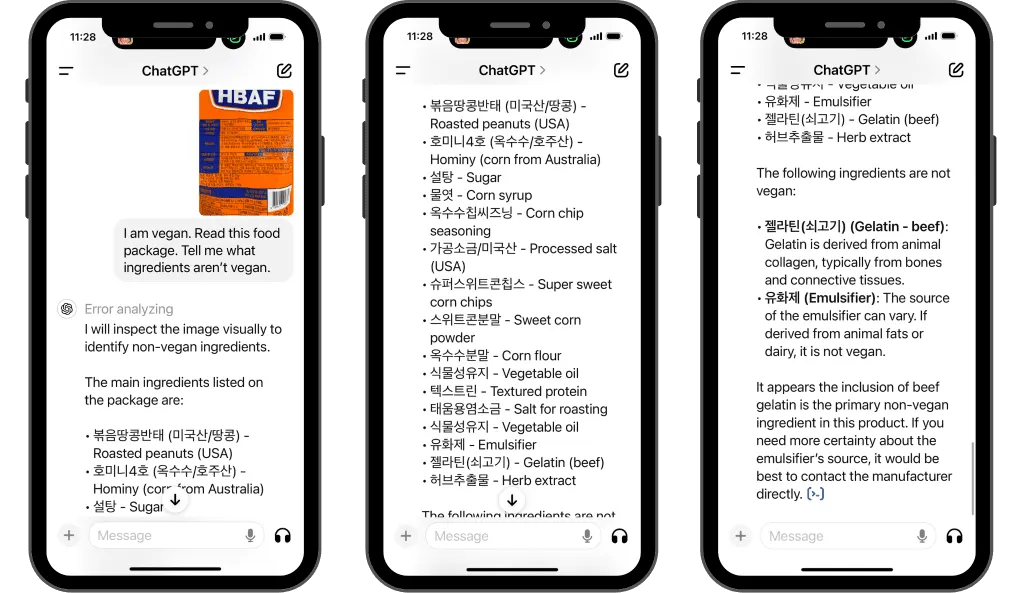
As you can see, it would be easy to assume mixed nuts would be vegan but they weren’t. Also, you need to read the labels of items you might assume AREN’T vegan. You might be surprised that Asia has interesting accidently vegan items like the following.
An Accidentally Vegan Find: Diary-Free Whipping Cream!
It is called Vegetable Whipping Cream, but it is often overlooked because the word for vegetable isn’t in English nor does it have the vegan logo anywhere.

Reading Packaged Food Ingredients
Additionally, you can quickly check the allergy ingredients of packaged foods there is a handy allergen box. After learning to spot these words, you’ll be able to tell if the product contains any of the common allergens that are not vegan.
The image below shows the nutritional information for a box of whipping cream. We have highlighted the allergen warnings with a blue rectangle.

For this brand, the allergen information indicates that it may contain soybeans. Note: The allergen warning line on some products may indicate that the product was manufactured in a facility that also processes. This is usually denoted by the words _.
Certified Vegan in Korea
I am happy to say that Korea does have a vegan certification agency! I recommend taking a look at their website to see what new products to keep an eye out for. (http://vegan-korea.com) This certification makes finding vegan so much easier than it used to be, but there are still a lot of products out there that aren’t certified yet or are accidentally vegan- vegan without the company necessarily intending for it to be. Good Luck!
Read More Vegan Articles with South of Seoul
-
Exploring What Certified Vegan in Korea Means
ContentsView article sectionsSome Companies Cerifying Food Vegan in KoreaFive Companies Organizations Capitalizing on Vegan LabelingAbout the ‘Certified Vegan’ Status in KoreaKAVCS is a Private OrganizationKAVCS ResponsabilitiesObtaining a Certified Vegan CertificationKAVCS Funding SourcesNot All Vegan Korean Food is Certified VeganRead More About Living as a Vegan in KoreaInterest in vegan food continues to grow across South…
-
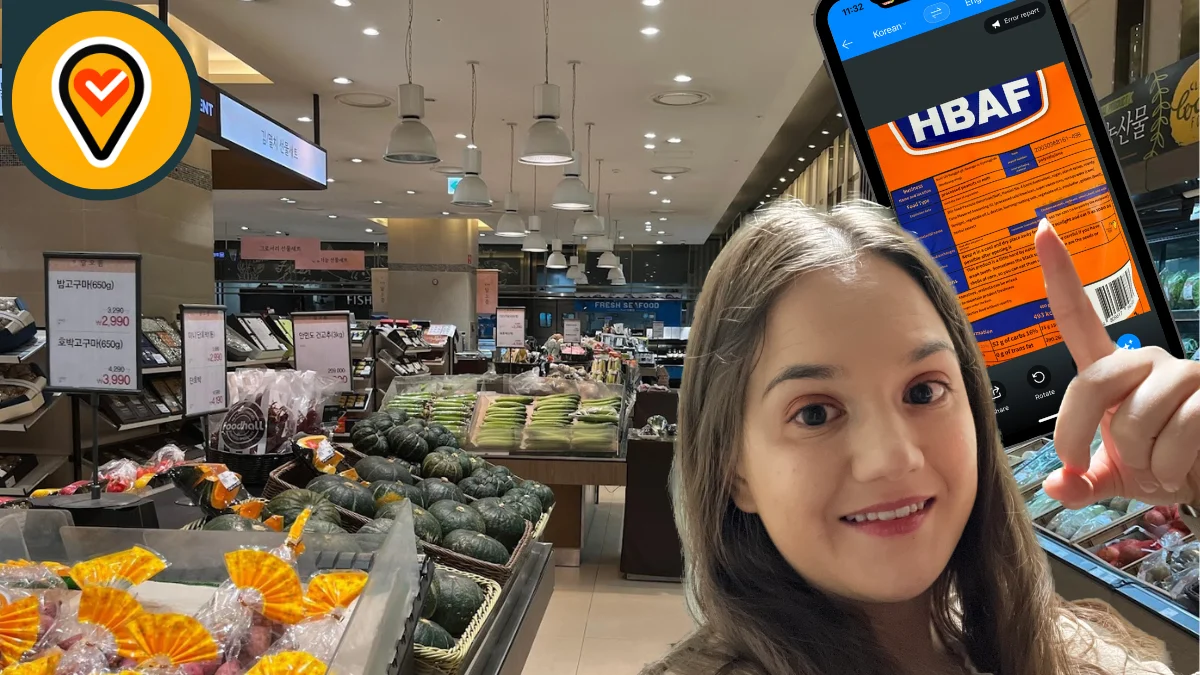
Tips for Finding Accidentally Vegan Food in Korea
ContentsView article sectionsThe Struggle to Shop for Vegan Food in KoreaChecking Ingredients of Packaged FoodsHangul Words for Key IngredientsUsing Papago to Read LabelsUsing ChatGPT to Analyze LabelsAn Accidentally Vegan Find: Diary-Free Whipping Cream!Reading Packaged Food IngredientsCertified Vegan in KoreaRead More Vegan Articles with South of SeoulLooking for a quick cheat sheet for finding accidentally vegan…
-
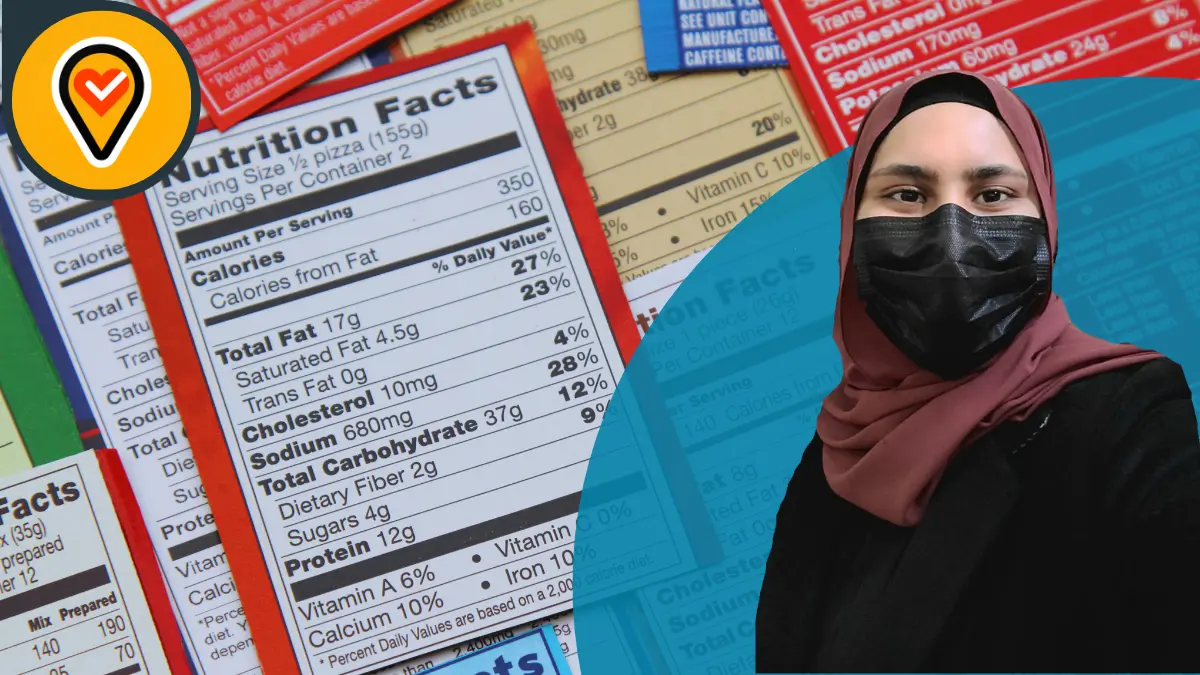
Reading Korean Nutrition Labels
ContentsView article sectionsListen to the BlogCastWhere to Find Nutrition Labels on PackagingThe Basics of Korean Nutrition LabelsOverseeing AuthorityComparing with Labels from Other Countries“kcal” vs “cal” for CaloriesCalories and Serving SizeCalorie BreakdownServing SizeExample: Calories and Serving SizeIngredients and AllergensIngredient ListAllergens: “Contains” and “May Be Produced In a Factory That…”Example: Ingredients and AllergensNutrient BreakdownMacronutrientsVitamins and MineralsDaily Values…
Article Information & History
Article History
No formal audit has been recorded for this article under the current South of Seoul editorial process.
Before You Act
South of Seoul articles document information available at a particular point in time. Prices, hours, services, policies, procedures, laws, eligibility requirements, transportation, contact details, and local conditions can change.
Use this article as a research starting point and confirm important details using current official resources, direct contact, Naver Maps, Kakao Map, and other reliable sources when appropriate.
For consequential immigration, legal, medical, or financial decisions, confirm current requirements with the relevant official authority or an appropriately qualified professional.
See something that needs updating?
Help us keep practical information useful. Reader reports are reviewed by our editorial team and do not automatically change this article.

 South of Seoul
 Lanae Rivers-Woods, MAIT


 Jetta Allen