National Liberation Day in Korea 광복절
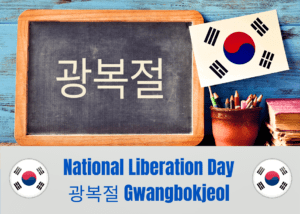
ContentsView article sectionsAbout National Liberation Day 광복절History of National Liberation DayCelebrating National Liberation Day in KoreaPlaces to Visit on National Liberation DayPotential Inconveniences on National Liberation Day in KoreaHow to Source Additional Information About LocationsWondering about National Liberation Day (광복절 Gwangbokjeol) in Korea? Then, here is a quick overview of this holiday celebrating the country’s independence from Japanese colonial rule. The post includes information for those visiting South Korea and those living in the country wishing to make the holidays a part of their lives. About National Liberation Day 광복절 National Liberation Day (광복절 Gwangbokjeol) is a ‘red day’ or public holiday on the Korean calendar. A ‘red day’ means that salaried employees have a paid day off for National Liberation Day, a Korean public holiday celebrated on August 15. (When this day lands on the weekend, a celebration may be on an alternate holiday such as Friday or Monday.) National Liberation Day or Gwangbokjeol (광복절) is celebrated on August 15 in Korea. Although this day is celebrated in many areas around the world as Victory Over Japan Day (or V-J Day), the day carries a great deal more significance to Korea. National Liberation Day marks the end of Japanese colonial rule in Korea and its independence and is a turning point in Korea’s history. This day signifies the end of Japanese rule and the country’s journey toward independence and democracy. Therefore, Koreans observe National Liberation Day on August 15 annually. Although National Liberation Day is often referred to as Independence Day for Korea, it should not be confused with Independence Movement Day (celebrated March 1). Both National Liberation Day and Independence Movement Day are important holidays in Korea’s history and struggle for independence. Gwangbokjeol (광복절) means “restoration of daylight” (광 light, 복 restoration, 절 holiday). Therefore, the name Gwangbokjeol carries a great deal of significance for the holiday. History of National Liberation Day Korea was a colony under Japanese rule from 1910 to 1945. During this time, the Japanese government and military was marked with oppression, exploitation and cultural assimilation. Therefore, this period in Korea history is quite dark and continues to shape Korean society and politics still today. In August of 1945, the Japanese empire surrendered to the Allied Powers and brought an end to World War II and Japan’s rule of Korea. On August 15, Korean leaders declared their independence and established their government. As a result, this day opened a new chapter in the history of Korea and the journey towards freedom, democracy and national unity. Today, National Liberation Day celebrates Korea’s cultural heritage and progress. In addition, Koreans celebrate it as a day of national unity and reflect on the sacrifices made in the struggle for Independence. The following videos give more information on National Liberation Day. Celebrating National Liberation Day in Korea National Liberation Day, celebrated on August 15, occurs in the summer. Therefore, the temperatures are still very hot and the days are humid, which may make staying outdoors for long periods uncomfortable for some people. However, many others use this time for beach vacations since warm weather and beaches go perfectly together. You may notice many Korean national flags (called 태극기 taegeukgi) in homes and businesses or on the streets to commemorate the day. Across South Korea, many activities and events take place on National Liberation Day. Typically, there is an official ceremony held at Independence Hall in Cheonan or in Sejong at the Sejong Center for the Performing Arts. Also, the official “Gwangbokjeol song” (광복절 노래) is sung at official ceremonies. There may also be traditional dance and music performances at the palaces, such as Gyeongbokgung Palace and Deoksu Palace. Places to Visit on National Liberation Day If you want to learn more about Korea and the history during the Japanese colonial rule, you can visit Independence Hall in Cheonan or Seodaemun Prison History Hall. Both museums have information and displays that are a bit graphic to view, but portray accurate depictions of history during this period. Learning more about what Korea endured during this rule can help you to understand and feel more connected to the culture and people of Korea. Potential Inconveniences on National Liberation Day in Korea Obviously, any of the following inconveniences may or may not occur depending on where you live in South Korea and the current social climate. However, the awareness that the following issues may occur may allow you to better plan ahead and avoid stress: How to Source Additional Information About Locations If you have questions about things like business hours, you can use the free foreigner support app/phone number 1330. In addition, using apps like Naver can help you navigate with expected traffic times. SOUTH OF SEOUL EDITORIAL INFORMATION Article Information & History Historical Record Originally written by KimchiRednecks Originally published March 6, 2023 Article History March 6, 2023 Article edited About 3% of the article changed March 6, 2023 Article edited About 3% of the article changed March 6, 2023 Originally published Written by KimchiRednecks No formal audit has been recorded for this article under the current South of Seoul editorial process. Historical article: This article has not yet been formally audited under South of Seoul’s current editorial process. It remains available as part of our publishing history and may contain information that has changed since publication. Before You Act South of Seoul articles document information available at a particular point in time. Prices, hours, services, policies, procedures, laws, eligibility requirements, transportation, contact details, and local conditions can change. Use this article as a research starting point and confirm important details using current official resources, direct contact, Naver Maps, Kakao Map, and other reliable sources when appropriate. For consequential immigration, legal, medical, or financial decisions, confirm current requirements with the relevant official authority or an appropriately qualified professional. See something that needs updating? Help us keep practical information useful. Reader reports are reviewed by our editorial team and do not automatically change this article. Website What needs attention? Select a reason Outdated information Business closed or moved Hours changed … Continue reading National Liberation Day in Korea 광복절
