10 Fun Caves Across Korea

Looking for something a little different to do this weekend? South Korea is full of interesting caves that are a great adventure to escape the rain or summer heat. South of Seoul challenges its readers to get out and explore the wonderful caves across Korea.
Our Experience Visiting Caves
We’ve enjoyed every cave we’ve visited in South Korea, even though we’re not really cave enthusiasts. Each cave we explored was so well-preserved that we finally understood why people rave about them. In the past, we’ve visited caves in other countries, but they were mostly filled with photos of what used to be there before everything got destroyed.
What to Know About Visiting Caves in Korea
Keep reading to learn some of the things we wished we knew before entering the cafes in South Korea:
Prepare for the Cold, Even in Summer
Korean caves, like most caves around the world, maintain a consistently cool temperature, even during the hot summer months. While it might be scorching outside, you can expect a temperature drop once you enter. It’s often a surprising shift, so it’s wise to bring a light sweater or jacket. This makes caves an ideal escape from the summer heat! Historically, Koreans have long recognized the cooling properties of caves, and they were often used as refuge spots during warmer months.

Wear Proper Footwear For Uneven Floors
Exploring caves in Korea can be an exciting adventure, but it’s important to wear sturdy, comfortable shoes. Korea does not perfectly smoothed out for your comfort, which can lead to slippery or rough terrain. Overlooking this can lead to discomfort, or worse, injury. Korean caves, especially those in areas like Jeju Island, often feature natural formations that haven’t been altered to make your walk easy, making good footwear essential.

Photo Credit: Lindsay Renee Pyeongtaek Travelers Facebook Group
Caves in Korea May Be Too Tight for Claustrophobic Visitors
No, really, they can be real tight. While caves are awe-inspiring, they can be intimidating for people with a fear of tight spaces. Some of Korea’s most popular caves, such as those in Jeju, feature narrow, winding passageways where visitors must crawl or squeeze through. This is part of the excitement for some, but it can be challenging for others. Historically, Koreans used caves as hideouts during times of invasion, such as the Japanese invasions of the late 16th century. This makes the experience of visiting even more thrilling but also adds to the potential discomfort.
Sometimes You Need Reservations

Photo Credit: Beth Sandoz Vogel in Pyeongtaek Travelers.
Not all caves in Korea are open for unrestricted access. Some caves, especially those that are popular tourist spots, may require reservations. This is often due to space limitations and public health guidelines (especially relevant during the COVID-19 pandemic). We recommend planning ahead and booking tickets in advance, particularly during the peak tourist seasons.
Korea has Some Well Protected and Beautiful Caves

Photo Credit: Denece Woodfield in Pyeongtaek Travelers Facebook Group
Korean caves are famous for their natural beauty. From the expansive rooms filled with stalactites and stalagmites to underground rivers, Korea’s caves offer stunning views and unforgettable experiences. For example, the Manjanggul Cave on Jeju Island is one of the longest lava tubes in the world and showcases incredibly well-preserved volcanic formations. Many of these caves are still in pristine condition, unlike some caves in other countries, making them even more remarkable to visit.
Caves in Korea Have Interesting History
Korean caves have a rich historical significance. During various periods of conflict, including the Japanese invasions and the Korean War, Korean’s used as shelters or hideouts. Some caves were even used as military bases or places of refuge, providing protection from invading forces. Exploring these caves gives visitors a sense of Korea’s turbulent past, connecting them with the country’s historical resilience.
Themed Caves Exist Just for Fun
Not all caves in Korea are natural. That’s ok. Sometimes companies create artificial caves for leisure and entertainment. These caves often offer a cool, relaxing environment for visitors to escape the heat. Popular with tourists, some of these caves even feature wine bars, offering a unique experience where you can enjoy a glass of wine in a natural underground setting. These themed caves are a testament to the ongoing fascination with caves as both functional and recreational spaces in Korean culture.

Photo Credit: Lindsay Renee Pyeongtaek Travelers Facebook Group
10 Caves to Visit in South Korea

Gwangyang Wine Cave
061-794-7788
Copy and paste phone numbers into Naver Maps to get directions
Hangul Name:
광양와인동굴
Hangul Address:
전남 광양시 광양읍 강정길 33

Daelee Cave
033-541-9266
Copy and paste phone numbers into Naver Maps to get directions
Hangul Name:
대이동굴
Hangul Address:
강원 삼척시 신기면 대이리 대이동굴지대

Yongyeon Cave
033-553-8584
Copy and paste phone numbers into Naver Maps to get directions
Hangul Name:
용연동굴
Hangul Address:
강원 태백시 태백로 283-29
Description:
The cave is formed by limestone deposited in the Paleolithic Ordovis period are limestone caves that have been slowly dissolved in rainwater and groundwater over the past hundreds of years, and were designated as Gangwon-do Memorial No. 39 on February 26, 1980. Its total length is about 843 meters, and inside the cave is a large square with a width of 50 meters, a length of 130 meters and a height of 30 meters. The internal temperature of the cave is 9 to 11 degrees Celsius, and it is the only dry cave in Korea, with no underground water at the bottom of the cave, but there are 5-6 limpools. There are no underground water at the bottom of the cave, but there are five or six limpools. Lava and limestone are developed everywhere, and many characteristic cave animals are found due to their abundance of humidity and organic quality. It is the highest-level (980 m) cave known in South Korea to date, and is a large and complex three-dimensional old-age cave. Twenty-nine major cave animals have been discovered, and six species of cave animals with their burrows as their parent habitat have been listed.

Gosu Cave
043-422-3072
Copy and paste phone numbers into Naver Maps to get directions
Hangul Name:
고수동굴
Hangul Address:
충북 단양군 단양읍 고수동굴길 8
Description:
A cool underground cave that is about 1.5km and spirals down using a staircase and tight spaces. Caution: if your claustrophobic, it’s not a good idea.

Hwanseongul Cave
033-541-9266
Copy and paste phone numbers into Naver Maps to get directions
Hangul Name:
환선굴
Hangul Address:
강원 삼척시 신기면 환선로 800
Description:
This is the largest cave in Asia.
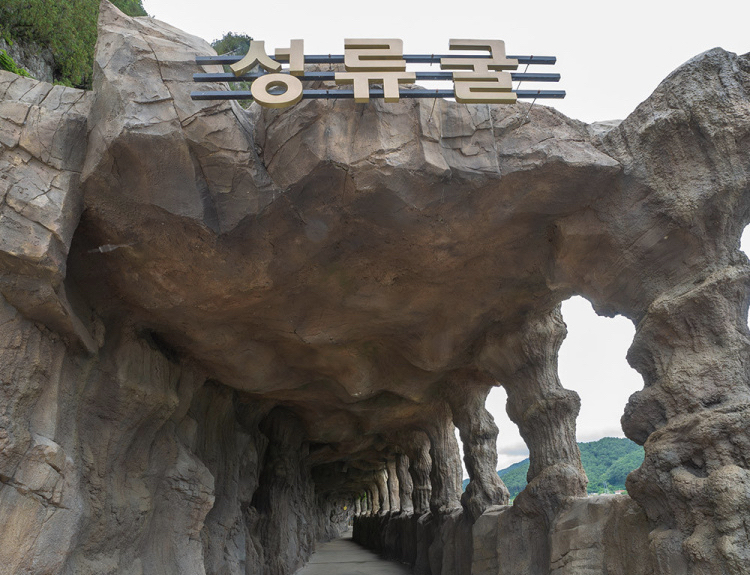
Seongryugul Cave
054-789-5404
Copy and paste phone numbers into Naver Maps to get directions
Hangul Name:
성류굴
Hangul Address:
경북 울진군 근남면 성류굴로 221
Gosu Cave
043-422-3072
Copy and paste phone numbers into Naver Maps to get directions
Hangul Name:
고수동굴
Hangul Address:
충북 단양군 단양읍 고수동굴길 8
Description:
A cool underground cave that is about 1.5km and spirals down using a staircase and tight spaces. Caution: if your claustrophobic, it’s not a good idea.

Jade Cave (Hwarok Cave)
043-848-0503
Copy and paste phone numbers into Naver Maps to get directions
Hangul Address:
충북 충주시 목벌안길 26
Description:
Cool experience to walk through the jade mine and (short) kayak ride underground. Stroller friendly and cafe available. Plenty of parking.

Small Dragon Palace Cave
Hangul Name:
작은용굴
Hangul Address:
충북 청주시 상당구 문의면 상장리 산46-8
Description:
A small and fun little cave.

Gwangmyeong Wine Cave
070-4277-8902
Copy and paste phone numbers into Naver Maps to get directions
Hangul Name:
광명동굴
Hangul Address:
경기 광명시 가학로85번길 142
Description:
This is a family friendly wine tasting and cave.


Lanae Rivers-Woods moved to Korea in 2011 where she lives in the countryside with her family, friends, and puppies. She holds a BSSW (Bachelor’s of Science in Social Work), a MAIT (Master’s of Arts in International Teaching), and registered by the Pyeongtaek Korean Times with the Korean government as a Cultural Expert.
Ms. Rivers-Woods used her 15 years experience as a social architect, UX/UI designer, and technology consultant to found South of Seoul in 2015. South of Seoul is a volunteer organization that leverages technological tools to mitigate cultural dissonance in multi-cultural communities.
Through South of Seoul, Ms. Rivers-Woods works with independent volunteers, non-profit organizations, businesses, local & federal government, universities, and US military organizations to develop solutions to support English speaking international residents in rural South Korea.
Additionally, Ms. Rivers-Woods founded the South of Seoul smart phone app available for Google Play and iPhone. The app provides information a resources for those living and traveling in South Korea.
When she isn’t in South of Seoul development meetings or working her day job, Ms. Rivers-Woods loves to be outside at skate parks, the beach, or playing in the mountains.
Lanae Rivers-Woods, MAIT
Lanae Rivers-Woods moved to Korea in 2011 where she lives in the countryside with her family, friends, and puppies. She holds a BSSW (Bachelor's of Science in Social Work), a MAIT (Master's of Arts in International Teaching), and registered by the Pyeongtaek Korean Times with the Korean government as a Cultural Expert. Ms. Rivers-Woods used her 15 years experience as a social architect, UX/UI designer, and technology consultant to found South of Seoul in 2015. South of Seoul is a volunteer organization that leverages technological tools to mitigate cultural dissonance in multi-cultural communities. Through South of Seoul, Ms. Rivers-Woods works with independent volunteers, non-profit organizations, businesses, local & federal government, universities, and US military organizations to develop solutions to support English speaking international residents in rural South Korea. Additionally, Ms. Rivers-Woods founded the South of Seoul smart phone app available for Google Play and iPhone. The app provides information a resources for those living and traveling in South Korea. When she isn't in South of Seoul development meetings or working her day job, Ms. Rivers-Woods loves to be outside at skate parks, the beach, or playing in the mountains.